“Liberty will not descend to a people, a people must raise themselves to Liberty”

I wonder if Spiegelman places himself at the center of his narratives (both Shadow and Maus) for a reason that is greater than his self-admitted narcissism.  The first “page,” or the opening image if you prefer, is a reproduction of a September 11th (1901) newspaper that heralds the assassination attempt on President McKinley.  Just as noticeable as the banner headline is the implication that Emma Goldman was somehow responsible.  I don’t know if this particular connection (the two events being news on Sept. 11th)  has been made before (or often), but they serve as an interesting juxtaposition.

The evocation of Emma Goldman, the anarcho-feminist or anarcho-communist (depending on who is appropriating her name) being falsely accused resonates on many levels.  First, the assassination attempt was an opportunity to arrest nine different members of the anarchist party (yes, yes anarchist party is an oxymoron), and one of them,  Leon Czolgosz, was executed.  As 9/11 became an excuse to round up and torture people who are “afraid of our freedom,” McKinley’s brush with death was an opportunity to discredit a party who was a major driving force for the labor movement.

However, returning to my initial argument, I would suggest that the evocation of Goldman’s name is an attempt by Spiegelman to align himself with radical voices of America’s past.  Much of the book is abut how Spiegelman feels that he needs to disseminate the message that he is dissatisfied with politics (the forming of the Ostridge Party, the interview that was never aired, the bed full of unconcerned men).  It is clear that he feels as though he is a lone voice of truth.  In light of this, the fact that his works are autobiographical aligns him with other voices of radical change, as many voices of radical change are expressed through this genre (Malcolm X comes to mind, not to mention Goldman’s own autobiography).

Through autobiography Goldman expressed a sentiment that was shared by a disenfranchised proletariat and Malcolm X spoke for an oppressed race: perhaps Spiegelman’s “narcissism” is an attempt to voice the opposition that is conspicuously absent from mainstream media.

I realize that this may be a grand comparison for a collection of “comix,” but I figured I could get away with a bit of overstatement on my final blog entry.  Speaking of which, I enjoyed our blogging experience and if this blizzard keeps us from having class tomorrow, I wish you all a safe and happy holiday… or as Max Headroom would say…
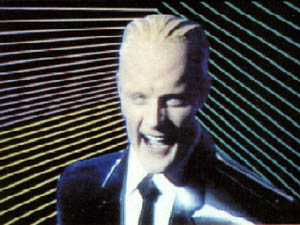
 “H-H-H-Happy Holidays postmodernists.”

Why Watch Fight Club When I Could Watch “Goblet of Fire” for the Fourth Time?

I really wish I had written my response before I read Giroux’s article. I had this idea… I was going to write about the significance of Fight Club’s presence in contemporary society. I was going to answer that question that Dr. Paul Smith tells me all Cultural Studies students are supposed to answer: Why this? Why now? I was going to go on a long diatribe about how this film is yet another Hollywood blockbuster in the guise of an intellectual exercise. And then I read that damn article. It said everything I wanted to say, but actually made sense. He used topic sentences, supporting details, relevant quotes and his reflexive moments were subtle. Well, as it is too late to speak of something else, here I go on my silly rant that ultimately is making the same point you have already read.

I guess I should begin by defending the article. I think he chose to only address the movie because he was specifically interested in the paradox of a big budget film bemoaning the effects of capitalism. His intention was not to produce a close reading of a text that less than one percent of our population will encounter. Furthermore, I don’t know that his beef was with the fact that the “story isn’t meant to embrace every single aspect.” Rather, I think he was more interested in the fact that the film did not perform as advertised. It was not a critique of capitalism; it was the championing of rightwing politics. It was a movie made for my father (the one who has seen every Schwarzenegger film and whistles at the sexy ladies on beer commercials.) It’s not that he wanted the film to address marginalized people, but he wanted some awareness that violence is not just men fighting in the basement to work out their Oedipal complexes, it is also battered wives and police brutality.

As for my own views, philosophy and big-budget films don’t mix. If the theories are essentialized enough to make it into a society of the spectacle, they are already worthless (please see I heart Huckabee’s treatment of existentialism). The novel, while I’m sure it has its merits, was chosen for adaptation because it is littered with sex and violence, not because of its astute treatment of post-Marxist theories. It had guns, sexy people, and just enough homoeroticism to make it chic. The violence in the film is depoliticized, and MTV’d up. If anything, it was made more palatable, consumable. A lot of blood, but very little gore. Where was the hole in the cheek?

Finally, I can’t be the only one not to mention Marla. Of course she is the oppressed, psuedo-femme fatale, but not because she is responsible for the death of masculinity. In fact, its just the opposite. She is there to reaffirm it, to be objectified and ultimately saved.

Correct me if I’m wrong, but…

According to the universe of the film, won’t the sister still die in the plane crash?  The mother won’t be on the plane, but Donnie’s death won’t necessarily prevent Sparkle Motion’s performance and subsequent invitation to perform on Star Search.  Or, are we to infer that the sister will be too distraught to perform, thus preventing the dance troupe from their "destiny?"  This begs the question, if the girls aren’t on the plane, wouldn’t that minutely shift the weight balance on the flight?  At that altitude, wouldn’t the slightest shift alter the trajectory of the severed engine, propelling it into a different home?

Julie, strangely enough, I had less of an issue with Frank’s motivation.  I believe this is due to the fact that I read the Frank in Donnie’s hallucinations as being different than the "real Frank."  I thought the hallucinatory Frank was a composite character created from the images Donnie saw in his future.  The voice was different, he encouraged Donnie to Destroy things, and he flittered in and out of reality… In fact, is there any reason to assume that the actual Frank would be able to travel in time the way Donnie did?  Again, I think the rabbit only existed in Donnie’s mind, perhaps a survival mechanism, or a specter of the things to come.

Like Josh, I was enamored by visual aspects of the film.  Yet, at the risk of providing a less intelligent analysis, I was most interested in the appropriation of tropes from B horror films.  It had teenage heroes and love interests, decidedly unhelpful adults, a strangely costumed "monster," and a murder on Halloween.  Finally, there was that terrific finale, the young boy waving that caused the mother to wave that spoke to the deterministic nature of reality.  This struck me as a David Lynch moment.  Though this was not a “horror film” per se, the elements lent themselves to the mis-en-scene. 

Is Xenophobia Racism?

Julie, your Post-Colonial reading of White Noise is an interesting one. I too noticed that Jack seemed to be keenly aware of the ethnicities of those around them. However, I didn’t take it quite as far as you. Isn’t there a difference between recognizing your doctor’s ethnicity (even if Jack uses ethnicity as the principle identifier), and refusing to see a doctor who is not white? By this I mean, Jack doesn’t necessarily demonstrate, as you write, “inabilities to understand and accept the ‘foreign’ goods, services, and people that he encounters,” for he does accept their aid. Rather, he seems to identify these people and products by their nationalities. Furthermore, this novel’s treatment of race can’t be boiled down to a white/other binary. Of all the characters, Germans are perhaps the most exoticised people with their dry spit and harsh sounding tones. I guess what I’m saying is that I think this piece is more complicated than Said’s Orient/ Occident split.

Instead, I would argue that White Noise is a novel of invasion, whether it is by media or people. I think you are right to point out that Jack notices that his world is changing, becoming more and more “foreign,” but at what point does DeLillo suggest that Jack sees the “infiltration of ‘the other’ to be an affront to his security and dominance as a white American man”? I agree that Jack is becoming Xenophobic, but this fear of the foreign is not limited to non-whites. When does Jack’s ethnicity become an issue? Isn’t the greatest invasion the non-descript “foreign” matter that enters his body?

I hope that we have time to discuss this in class, for I would be very interested in hearing you speak more about Mr. Grey. You argue that he embodies an “Ethnic Other,” yet the reader (not to mention Jack) only learns this at the very end of the novel. And even then, we are unsure as to his ethnic identity. Doesn’t the name “Mr. Grey” simply suggest an unknown?

Perhaps I am wrong. After all, he insists that his “bland diet” should be the key to his longevity. Not to mention the fact that he has built a career around the study of Hitler…

You only have 30 seconds to read this.

Given the diverse subjects addressed in this week’s readings, I really don’t know where to begin. Yet, given the nature of the hypertextual fictions that we encountered, not knowing where to begin seems strangely appropriate.

I was most interested in the ramifications, or at least the ones I noticed, of cyber-texts on literature. If anything, engaging in Pax and Hegirascope demonstrates that the book itself is a technology with limitations and advantages of its own. In fact, hypertextual literature, in many ways, seems to be as large of a regression as a technological advance. The audience interaction, lack of a clear ending or beginning, and the constant digressive nature of the narrative structure are closer to an oral tradition than one of print. In fact, everything that makes hypertextual literature different than print seems to stem from story telling before the advent of the printing press. This begs the question, what advantage, or new dimensions, does computer technology bring to story telling. Don’t we miss narratives? I can see the benefits in terms of information dissemination (i.e. hypertextual links in an encyclopedic definition) but does it add anything to a piece of fiction beyond gimmicks?

To answer my own question, I found the unique use of the word/text combo in Pax to be especially interesting. I don’t know that I cared for that particular piece, but the idea of interactive moving images seems to be a promising avenue. Perhaps a hypertextual version of "The Sims," where many characters are participating in a single story that display multiple, yet unique, perspectives with the click of a mouse. To combine this discussion with the topics addressed by Poster, the coupling of fiction with databases filled with personal information may very well be the future of storytelling. A simple glance at the cache of any person’s computer should reveal, not only topic preferences, but spending habits, favorites sport teams, and even sexual preferences. Imagine personalized fictions that could pander to the reader’s desires, interrupted by commercials for their favorite products. Perhaps this could be taken to the next level. They are adding microchips into the tags of clothing to track consumer habits. Couldn’t this be linked to a fiction, one starring the reader, set in the stores that the reader visited that very day? The possibilities are endless.

This has to be my single most incoherent and ridiculous post I have written to date. I didn’t even mention Baudrillard. Perhaps if I added a hypertextual link, it wouldn’t seem so idiotic.

A Rehashing of What has Already been Mentioned

As I write this post on the tail-end of your ideas, I find myself encountering many of the same problems, the greatest of which is translation. I don’t know that I agree with John when he argues that the Tagalog was used to simulate "a mesh of Spanish, English and native dialects." I’m pretty sure it is an Austronesian language that is the base of Filipino (the language, not the nation). Perhaps you were thinking of the "Pigeon English" that is sometimes spoken, not only in the Philippines, but many other Asian countries (especially China). Furthermore, the un-translated text also includes Latin, French, Spanish, and probably a few others I did not recognize. For me, the lack of translation speaks to a greater problem, one that has supposedly existed since the Tower of Babel. Texts are inherently untranslatable. To translate is to conquer. To change a language into English is to divorce the original language from its context and rob it of its inherent connotations. However, this begs the question: what about the texts she did translate? Are there in-jokes I would get if I read these languages? Is there a subtle context within the translation? I believe that this question balloons out to encompass the entire text. I am only vaguely familiar with the history of the Philippines, the filming of Apocalypse Now, and the paintings of Goya. What intertextual references am I missing with my Eurocentric understanding of our world’s history? If anything, this text plays off of our lack of knowledge and in doing so is able to rewrite history. What part of this text is real? Was there a former child actor in Apocalypse Now? This of course speaks to the fictional (or at least narrative) nature of history that many of you have already mentioned. Hagerdorn’s text is asserting a different voice in the narrative of the history of a notion. Though fictive, I am no position to see to what extent it is so.

The Trouble with “Aura”

I thought perhaps I could jump-start this week’s cyber-discussion with an unanswered question I have had with Benjamin’s "The Work of Art in the Age of Mechanical Reproduction.” The lynch point of his entire discussion seems to center on the presence and subsequent loss of an “aura” in works of art. To begin, I have a hard time comprehending what Benjamin means by the word “art,” as news reels and letters to the editor are argued on the same plane as plays and sculpture (I think this moves beyond the collapse of a high/low distinction, as he seems to be more concerned with political ramifications and the replacement of the “artist” by the propagandist.) It seems to me that any form of mass communication fits comfortably in his definition. Isn’t this problematic? If he wishes to analyze the loss of an “aura,” shouldn’t he also look to “high art” and how its reproduction affects the modern viewer? What if, instead of a long diatribe on film, he had analyzed the contemporary reaction to “The Mona Lisa,” (a piece that he recognizes as being highly reproduced) would his conclusion still be the same?

However, my greatest trouble in understanding this essay lies in Benjamin’s connotative use of the word “aura.” I have never been clear whether he is celebrating, lamenting or simply reporting its death. I think Benjamin provides his clearest definition of the word in his 5th footnote as he critiques its meaning. He writes, “The definition of the aura as a ‘unique phenomenon of a distance however close it may be’ represents nothing but a formulation of the cult value of the work of art in categories of space and time perception. Distance is the opposite of closeness. The essentially distant object is the unapproachable one” (243). At times, it seems that he is troubled by the loss of uniqueness, the creation of a Hollywood star system, and the creation of a “distracted audience.” Indeed, in his 4th footnote, he writes, “the poorest provincial staging of Faust is superior to a Faust film in that, it competes with the first performance at Weimar” (243). However, he also seems to be calling for the politicization of art in response to the Fascist’s use of art in politics (again, a clear definition of art would be useful in this discussion). In this sense, it would seem that he would be excited to demystify a cult, especially that of Hitler’s. To further my confusion, Benjamin doesn’t seem very troubled with his own ambiguity. Is this a sign that he has given a clear opinion on the matter and I have just missed it?

So, what do y’all think?

400 words of nothing

I have been waiting for some time to post, as I did not want the first response to The Female Man to be the voice of a male, but as I have another paper to write, here I go!

I am having a difficult time providing a coherent critical response for a couple of reasons.  First, this is hardly a subtle piece that warrants a nuanced reaction.  Rather, it is the pummeling of a blunt instrument over the collective heads of a patriarchal society.  What could I (a bumbling bag of testosterone) possibly have to add, critique or question?  It seems to me that this text is structured so as to make my voice irrelevant (and I assume that is the point).  My ethos has been stripped and I shall gladly defer any further conversation to the voices this novel purports to represent.  (I am not sure who this is, as the question of gender was so thoroughly troubled by the characters that populated Manland and Whileaway that it moves beyond the simple label of “woman” let alone “feminist.”)

Unfortunately, as I have little to add to the discussion of the text, I had hoped to address Harraway’s seminal text, “A Cyborg Manifesto.”  However, once again, I have hit a wall.  Her text is so dense and meandering that I really don’t know where to begin.  I have yet to engage in a conversation or sit through a conference presentation that did not essentialize her text in one way or another.  In fact, her neo-Marxist critique (the central thrust of the entire essay) always seems to be overshadowed by discussions of baboon hearts and breast implants.
 
So, rather than attempting to engage two impenetrable texts with a 300-word response, I will attempt to spark a discussion with reflexive moment.  It seems to me that what we have here is the nominalistic representation that I was blathering on about while we were discussing Whitehead’s text.  It troubles me that, when I am presented with it, I have very little to say.  Is it that I rely so heavily on essentialist representations that these texts have left me befuddled?  Is the reason that the first response to a text that we have had two weeks to read is being posted the night before the final day is that we all are encountering a similar problem?  These two texts address a central problem in our society, a problem that I care quite a bit about, and yet I have written 400-words of incoherent, inconsequential ramblings. 
 
Is it good that I am speechless?  Or more to the point, does this void provide space for an otherwise marginalized (yet, not essentialized) group so that they may have a voice?

I would be willing to forgo truth for a little originality

It had been some time since I viewed this film; however, upon seeing it last week, I was struck by the same thought that occurred to me the first time I watched it:  “Can a Hollywood film ever escape the 3 act structure?”  How is it that a story told backwards adheres to a traditional narrative structure and character with no memory still manages a significant arc?  It seems to me that with the incredibly experimental nature of contemporary novels, there should be some room for similar creativity in feature films.  What we need is “Aqua Teen Hunger Force: The Movie.” 

 
Kiraprater (sorry I had to use your handle, your identity is a mystery to me), I wouldn’t be so quick to dismiss truth.  In the universe of Memento, there are things that actually happen.  For instance, the audience is well informed about the nature of Leonard and Natalie’s relationship.  There is a “truth” that we witness, and then a false memory that is juxtaposed against it.  I have trouble with the idea that Leonard’s “memories” are just as valid as the other characters.  For one thing, it seems to undercut the premise of the entire film.  You are absolutely right in the case of the scene you mention in your blog, Leonard is just as unreliable as Teddy; yet, I think this speaks to the unreliability of human perception (or memory if you would rather), not the absence of truth.
 

I am reminded of Jorge Luis Borges’s short fiction “The Library of Babel,” which describes a library (one that holds more book than there are atoms in the universe) that contains every conceivable variation of a book that is 410 pages in length.  Therefore, this library holds every sentence that has ever or will ever be written.  Therefore, it must contain, within its walls, the meaning of life and the answer to every question ever asked.  However, for every book that holds an answer, there are millions of counterfeit books that are similar, but contain minor variations.  Borges describes “librarians” who waste their lives searching through the volumes in the hope of finding meaning within the seemingly infinite number of book variations.

 
The reason I recounted this story was not to reach my 300-word minimum, but rather to argue that there is a truth, we just have no hope of ever knowing it.  In the universe of the text, Leonard did, or did not kill his wife.  There is an answer… a truth.  Yet, the truth is lost in the fallibility of the human mind and unreliability of the signifying chain.  Either way, I am sure it will lead to a good discussion in class.

(Insert funny and clever title)

"We have too long had imposed upon us, both from inside and outside, a narrow constricting notion of blackness." (hooks, par 10)

At the risk of sounding cantankerous, I feel as though I should re-clarify my argument.  I stated in both the blog and in class, that The Intuitionist is not entirely an essentialist novel.  I also agree fully that it is possible to have a novel populated with black characters that is entirely nominalistic, as described in the hooks quote cited in Dr. Sample’s previous blog entry.  However, it is still my contention that Whitehead has done little to progress the "black novel" towards the nominalistic ideal presented in hook’s essay. 

Dr. Sample wrote, "To use a word that came up in class, it doesn’t necessarily equal a cliche to present a black man whose aspirations have been foreclosed because of the color of his skin. What looks like a cliche, others would call the truth, steeped in lived history."  I agree that cliche may have been an unfortunate choice of words (not because it is inaccurate, but rather due to its critical connotation); perhaps "trope" would be more appropriate.  However, Lila Mae’s father is a trope not because he is a "a black man whose aspirations have been foreclosed because of the color of his skin," but rather due to the fact that this is all we know of him.  If we look at the second definition of cliche (the one that does not concentrate on the triteness of a subject), we get, "A person or character whose behavior is predictable or superficial." ((dictionary.com) I know that the OED would have been more impressive, but I’m just lazy). It seems to me that each of the black characters in the novel, with the exception of Lila Mae, are structured in the same manner as a host of characters that came before them.  For evidence of this, I need go no further than our class discussion.  A number of students spoke of Lila Mae’s father as a complex, developed character, even though Whitehead dedicated only a few paragraphs to his description.  The connection was made, not through the text, but rather through the history of this trope, one that has been reinforced through countless descriptions from slave narratives through contemporary rap lyrics.

I do not feel as though this is a trite novel, in fact I think it was excellent.  Nevertheless, I would argue that it falls short of the hooks quote mentioned in Dr. Sample’s blog entry.  For the sake of summation, I ask the following question:  What has The Intuitionist done for the black novel?  Will future "nominalistic-black" writers cite it as a genre changing text?  I realize that I may be asking too much of Whitehead, but at this point, I am responding to the claims made in class as well as online.

Anyhoo, I’m glad for this opportunity to restart the debate via blog, as I’m still working to wrap my head around this text.

He reads the blogs and begs to differ.

I shall begin by stating that the use of tense in this novel is absolutely fascinating and I think we should discuss it for a few minutes in class.

I say this because I have the feeling that our entire conversation will be dominated (as I’m sure it should be) by discussions of race. However, I don’t know that this novel fits as comfortably with the arguments of bell hooks as we would like.

First, this narrative seems to be set in (an alternative universe?) in “Big City” America in the late 1960’s early 70’s. The very fact that the society is still segregated greatly simplifies race relations in the book: Whites are intolerant and blacks are not tolerated. It’s made clear that Fulton would have been silenced if not light skinned. (Somebody argued that this was evidence of a complication of race relations. I strongly disagree for the aforementioned reasons.) While I know we are to make every effort to avoid this debate, I don’t think that this text presents a post-modern sense of “blackness” in the way that Hooks champions in her article. If anything, this text is more like Ellison’s Invisible Man, as it uses complex metaphors and surrealistic imagery to present a rather uncomplicated (though astutely critical) version of race relations in the US.

Also, I wish to disagree with a previous argument that was posted on the blog that seems to imply (I may have misunderstood) that Lila Mae and Pompey’s mutual animosity somehow represents hook’s analysis of nominalism. Instead, I would argue that, in many ways, this personifies the “nationalist or assimilationist, black-identified or white-identified” (house v. field) that is the hallmark of the essentialist camp. Furthermore, the simple fact that Lila Mae misjudged Pompey demonstrates this mentality more than it undercuts it. Does this text champion the black intellectual in the way Cornel West would find productive? Do we really learn anything about Fulton besides his race? It would be completely irresponsible of me to suggest that this text is essentialist (and I have no intention of making this argument), but I don’t see it moving Black representation in a new direction. I don’t know that his book is the answer to bell hook’s request.

Either way, I think we should talk about the use of tense in the novel.

The Novel’s Unnamed Character and More Unintellig(able)ent Ramblings as to the Meaning of Postmodernism

I too found the reflexivity to be the most interesting aspect of this week’s text. However, it was the existence of the Aldebaranians that troubled me the most. While it could be argued that they were created by Orr to fulfill his need of help and resolution (much like Josh argues that Dr. Haber is a necessary component of the psyche), it’s problematic that they actually had a solution. If we are to read this meta-SF text in this manner, Orr had the solution to his problem all along (like Dorothy and her gaudy slippers).

For some reason, this doesn’t sit well with me… Orr was the jellyfish in the water, the helpless tool.

I would argue that this text is not about the wants and needs of Orr, Dr. Haber, or the dreaming rocks, but rather the wants and needs of Ursula K. Le Guin. Dr. Haber exists because novels need an antagonist, and aliens with solutions exist because novels need resolution. Orr reflects the horror of a self-aware character (if we take this a lot further than I would care to, Orr represents the horror of a character being worked through multiple drafts of a SF novel.) I had to come to this conclusion, otherwise I would be stuck in the horror of a “chicken or the egg” quandary involving Orr and Er’ perrehnne.

At the risk of drastically changing the subject with an insufficient transitional sentence, I would like to address Michael Berube’s article. I really don’t understand his particular beef. In terms of postmodern philosophy, architecture, art (as demonstrated in the Harvey chapter we were assigned), etc., I understand that we are mired in a nebulous world that is uncomfortably described as “postmodern.” However, in terms of literature’s use of this term, it seems relatively straightforward. Teachers break time periods into movements, and call those movements names. Why should the simple fact that elements of pomo’s distinctive characteristics exist in previous novels trouble the label more than any other movement? True, Don Quixote, The Odyssey and even the Bible are reflexive; does this mean we should scrap the whole project? For that matter, doesn’t every literary movement have predecessors that shared similar traits? Isn’t the entire modernist movement predicated on a neo-classical sensibility?

There is something starkly different between the writings of Faulkner, Eliot and cummings and the texts produced by Vonnegut, Vollmann and Pynchon. That difference needs a name. My teachers called it postmodernism. While it may be useful to trouble this distinction, I find it no more useful than troubling any categories in all of literature. However, to do so would be very postmodern (not to mention quixotic).

Sorry for the double posting, I can’t figure out how to work this thing.

Josh, you will have to expand on this in class, for I don’t know that I agree (perhaps I simply don’t understand). Dealing with themes of loss of innocence and alienation (I assume you are linking the work to T.S. Elliot-esque imagery) isn’t necessarily a hallmark of Modernism or Postmodernism. The telling feature may be how the characters come out on the other end. (i.e. Holden Caulfield laments his inability to erase the word “Fuck” or be a “catcher” in the rye. Yet, he lets his sister reach for the brass ring at the end without trying to save her. Eliot’s Prufrock doesn’t dare to eat the peach. In other words, the characters have changed as a result of their alienation.)

The real test here is whether or not Oedipa has been affected by her hallucinatory journeys. She may not have solved the mystery, but (to borrow a film metaphor) has her character “arced” at all? Some critics claim that she has evolved as a result of her journey (i.e. the false pregnancy, her self reliance.) This, more than the themes (for I’m sure we both can think of a dozen PoMo characters that are alienated and disenchanted), would align Pynchon with the modernists.

If I misunderstood your post, a thousand apologies.

“Play-gerism,” Postmodernism, and why Josh is only slightly smarter than me

Josh, you have written an incredibly insightful blog posting, one that shall be a worthy result of a Google search for the word “what-me-worryism.” Unfortunately, owing to the fact that you so thoroughly covered the topic and didn’t present a follow-up question, I shall, from this point on, abandon it altogether.

I have a general question about the class, one that has been troubling me (in one form or another) for a number of years now. Dr. Sample has gone through great pains to credit his sources (even the images in his PowerPoint), to ensure that living authors receive royalties for the works we read, and to reiterate the conventions of MLA. However, in light of Roland Barthes’s essay “The Death of the Author,” Jorge Luis Borges’s “Pierre Minard, Author of Don Quixote,” The photographs of Sherrie Levine, and Raymond Federman’s experiments in “play-gerism,” isn’t this decidedly un-postmodern? Isn’t the very concept of pastiche, mashing or the simulacral Vegas landscape predicated upon the appropriation of texts? I, of course, realize that for the sake of academic ethics, not to mention survival, we should be credited for our work, but my question still remains. Why is it acceptable to “sample” but not to plagiarize? It’s alright for the Coen Brothers to steal whole personas from Howard Hawks’s “His Girl Friday” in order to make “The Hudsucker Proxy,” for Lucas and Spielberg to borrow from Kurosawa. When is it postmodernism, and when is it stealing?

With that being said, I would like to present a second question, one about CoL49. As Dr. Sample pointed out, challenging the “postmoderness” of a text is futile, yet, I wonder what about this text warrants its inclusion in a class entitled “American Postmodernism.” Though we have only had a brief discussion as to the definition of the term, I will proffer my opinions and anxiously await your responses.

1. This book, as Dr. Sample articulated, “revels in pop-culture.” Whether it is a rock band, 1960’s drug culture, or the appropriation of the detective novel, Pynchon makes use of these tropes to trouble the high/low distinction.
2. This text is a critique of modern reason. Unlike the traditional detective story, Oedipa finds no resolution. In fact, each clue only further complicates the mystery at hand. Moreover, the little mysteries in the book (i.e. the significance of the ridiculous names, symbols, radio station call letters (which spell obscene words when reversed) or acronyms) remain a mystery by the end. This would speak to our fellow student’s complaint (I am terrible with names) about the lack of “truth.”
3. While I didn’t notice an obscene amount of intertextuality, the book makes reference to Nabokov’s Lolita. This is significant as Lolita, in some sense, is another postmodern anti-detective story. Is Pynchon referencing an author who is known for his own intertextual references?

I never know how to end these things.