So, I’m relaxing over spring break, recovering from the marathon that was Danielewski’s House of Leaves (thoroughly enjoyed nonetheless), and I start in on Joanna Russ’ The Female Man. After having finished the novel (shall we call it a novel?) a week later, I reflect. At times I thought the book was brilliant; the subversion of the science fiction, manipulating the genre to fit what she was trying to address on the feminist ‘front’, was outstanding. The Faulknerian use of stream of consciousness and first-person narration is also commendable. But then there were parts of the novel that became burdensome for me; in other words, at a certain point, I felt like the book’s entire discussion (the question of a woman’s role/freedom/right [I hesitate to provide a label for fear of a Jael-like counterattack] in the world) became repetitive; and I would guess if you go searching for criticism against The Female Man you might find a similar complaint somewhere…
…but really you don’t have to look any further than the book itself:
Shrill . . . vituperative . . . no concern for the future of society . . . maunderings of antiquated feminism . . . selfish femlib . . . need a good lay . . . this shapeless book . . . of course a calm and objective discussion is beyond . . . twisted, neurotic . . . some truth buried in a largely hysterical . . . [and so on and so forth]. (140-41)
Within the book, Joanna Russ has provided the reader with criticism for the book: The Female Man is its own worst critic. What does this tell us about Joanna Russ and her intentions? Is she mocking these critical voices; drawing attention to the very biases that they reinforce? Is this critical inclusion a form of self-deprecation of her novel? Is it a little bit of both?
Whatever answers we might conclude to these questions, this section of the book got me thinking about Danielewski. Of course, after three weeks of House of Leaves, we are all familiar with Danielewski’s tactics, his self-proclaimed preemptive strike against any form of literary criticism, or any attempt to disassemble the book. I’m not necessarily suggesting that Joanna Russ was trying to actively prevent criticism like Danielewski is, but she is certainly anticipating responses towards the book.
With House of Leaves already in the discussion, I also thought of another interesting comparison between the two authors. With the construction of numerous levels of ‘authorship’ (i.e. Zampano and Johnny Truant), Danielewski effectively ‘distances’ himself from the text. Conversely, Joanna Russ eliminates any separation between her and The Female Man by identifying herself in the book as both character and author, crossing the conventional line between author and text. I wonder what this accomplishes for the book. As the ‘1970s feminist trying to succeed in a man’s world’, what can we say about The Female Man Joanna and the author Joanna? I’m thinking it’s important to remember that she is only one of the four female ‘representations’ in the book.
…As you can tell, this book has left me with more questions than it has provided answers.
Side-note:
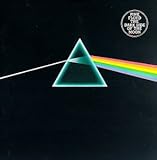
With all the references to the moon, it will be hard not to think of The Female Man whenever I listen to Pink Floyd’s ‘Dark Side of the Moon’. Now, I keep thinking of ‘Us and Them’ in terms of Jael’s version of Earth with warring male and female societies. Try it; it just about fits…