Authorship/Form in The People of Paper

This is the second book in a row that I won’t be able to finish in time, which is frustrating because this is due to a lack of time rather than a lack of interest. I still wanted to post on what I’ve observed so far, namely on authorship and form. Immediately–maybe three pages in–I was reminded of House of Leaves, per various voices claiming the page. In House of Leaves, Danielewski uses different fonts to distinguish between Zampano and Johnny Truant, and uses the appendix so that Truant’s mother, too, informs the text. We spent a great deal of time in class talking about authorship with that book, as I’m sure we’ll also do with this one, given the nature of authorship in these pages. Per that nature, or rather, structure, Plascencia distinguishes between authors not via font but via capitalized headings, columns, and chapters. Reading through this various authorship was, for me, not necessarily easier or harder than reading through the authorship in House of Leaves, though, to clarify, when engaged in Zampano’s text, I knew right away when the authorship changed to Truant due to the font change, whereas in The People of Paper, I sometimes made the mistake of reading a second column with the assumption that I was following a continuation of the same author from the first column. It was only when the POV in that column contradicted this that I was reminded to scan up to the heading to see who was speaking. As I progressed through the book, I didn’t make this mistake as often, for the form became more familiar.

While the various authorship reminds me of House of Leaves, the omniscient Saturn brings to mind the film, Stranger Than Fiction, where a character becomes aware that he is indeed a character. Certainly, Federico de la Fe feels aware of this Saturn/Author that follows him and Little Merced, forcing Federico to hide in mechanical tortoise shells, etc. The book falls in line with some of John Barth’s metafiction, notably in his short stories in  Lost in the Funhouse wherein the author interrrupts a story to discuss his process in writing the story or to otherwise insert some authorial information into the narrative. I had always disliked the effect this had on the story–that temporary removal of the reader from and subsequent insertion of the reader back into the text, but Plascencia frames his differently so that it is not a matter of interruption but a matter of structural authorship; in other words, the reader knows from the very first page of The People of Paper, just like the reader knows in House of Leaves, that this is indeed the way the narrative is structured, therefore you’re not reading a traditional narrative for twenty pages and come across a sudden, off-putting interjection by the author, as was the case sometimes with Barth. Mary Karr, in her memoir The Liar’s Club, writes a relatively straight narrative but for a sudden shift to second person in one paragraph in the middle of the book where she speaks to a man she had been formerly writing about in third person–a man who, as a child, had molested her. This accusatory paragraph directed at “you” stands out for me in the book because it was unexpected and it departed from the otherwise solid, objective memoir. This seemed, to me, to be the kind of thing that would’ve been weeded out in a workshop and I’m curious as to her defense of that paragraph.

I just wanted to note, lastly, that I was both envious of and in awe of the fact that this is Salvador Plascencia’s first novel, not to mention the fact that he’s a recent graduate of an MFA program and only three years older than me…
“Under the wreckage, the whole town was crushed, the mighty Samson among them.”

Never before (or after) was a haircut so disastrous…

In the Book of Judges (13-16), the story of Samson unfolds, and this story is all too familiar for nearly everyone in The People of Paper: a man, weakened by the seductive powers of a woman, meets his demise.

As a Nazarite, God has given Samson superhuman strength, which he used to defeat the Philistines on numerous occasions, killing thousands along the way.   Samson’s story in Judges 13-16 plays out like a see-saw of revenge between him and the Philistines.  Twice Samson experienced a woman’s betrayal, the latter resulting in his demise.  Samson’s wife, Delilah, assisted the Philistines in defeating him.  By cutting his hair, Samson’s agreement as Nazarite was broken, and as a result, “the Lord had left him” (Judg. 16.20).  With Samson’s power lost, he was taken into custody by the Philistines, and (long story short) he was brought in front of their Kings and harassed: “they made him entertain them and made him stand between the columns” (Judg. 16.24-25).

A tactical error, however, was made by the Philistines; they allowed Samson’s hair to grow back, allowing him to recuperate the Lord’s strength, and…well…Samson was pissed:

So Samson took hold of the two middle columns holding up the building.  Putting one hand on each column, he pushed against them and shouted, “Let me die with the Philistines!”  He pushed with all his might, and the building fell down on the five [Philistine] kings and everyone else.  Samson killed more people at his death than he had killed during his life. (Judg. 16.29-30)

Salvador Plascencia uses Samson’s story in the final chapter of The People of Paper.  He likens Saturn (or Sal or Himself?) to Samson: a man with superhuman strength brought down by the woman he loves.  In both cases, love for a woman turns on itself, acting as a smokescreen for the uprising of the newly strengthened masses (Philistines/EMF).  As Samson loses his superhuman strength, Saturn’s control over his own story slips from his grasp.  Saturn’s authorial voice is absorbed, and the book’s characters take control (note: chapter fifteen (one of the numerous ‘columned’ chapters) begins with Saturn’s column blank for three pages).

The structure of the book’s final chapter demonstrates the ultimate showdown between Saturn and his characters.  Literally nineteen different voices collide, competing for the book’s authorship and (perhaps most importantly) the book’s final word.  Like Samson, however, Saturn ‘prevailed’.  Samson found renewed strength in capillary regrowth, and Saturn’s body “adapted” to the sadness of his lost love, allowing him “to summon enough strength to press against the columns” (242).  At last, “[o]nce the first support was down the others were easily tipped, all the columns falling, giving Saturn full control of the story” and subsequently the last word (242); appropriately, that last word is “sadness”.

As a reader, we witness this battle between author and his subjects, but whom are we to support?  In the final chapter, Rita Hayworth complicates this question:

It is Delilah who is the hero, the one who brings the brute down.  Avenging the deaths of the thousands he killed.  Standing up for the Philistine people and the tender skin of their cocks. (235)

But in what light are we supposed to view Rita Hayworth?  She forsook her lettuce pickers, substituting the new for the old.  Come to think of it, much of the novel is about substitution: old, lost loves are replaced by newer ones.  Just about all of the characters in this book participate in some kind of substitution, and so the big questions that I’m not quite ready to answer are: Do these substitutions work?  Do they provide workable alternatives?  Can the broken-hearted ever heal or, at the very least, manage the weight of their losses?

I’m not sure.

One last note of interest: Although Saturn ‘succeeds’ in taking back his story, eliminating the other authorial voices, the final paragraph suggests he has not truly regained power:

Together [Federico de la Fe and Little Merced] walked out of their stucco, through the softest of all lawns, and Little Merced, who still stunk of dead fish, raised her parasol, shading her and her father.  They walked south and off the page, leaving no footprints that Saturn could track.  There would be no sequel to the sadness. (245)

Saturn can no longer contain the characters within the borders of the page.  Without Federico de la Fe and Little Merced, Saturn cannot write a sequel.   The story ends not because the author has chosen to end it, but because he has lost the power to extend it.  Perhaps this echoes Samson’s story.  He must sacrifice himself to kill the Philistines: “Under the wreckage, the whole town was crushed, the mighty Samson among them” (234).

Enjoy:

Grateful Dead’s “Samson and Delilah”

Authorship, Cyborgs

“I am the author and I know,” Russ says on page 165. If, as Karin and Jael propose, all four women are the same woman, made different by their external circumstances, it seems to contradict the idea that women only appear to be the same because their circumstances repress them to the level of household objects. Maybe the four women are not the same person representing one-dimensional sides of a conflicted self, but they are just different possibilities of the same person, upon which each woman’s bizarre circumstances have shaped her so that other possibilities of herself are strange and horrifying to her (the murderous one, the lesbian, the repressed wannabe-housewife).

By claiming she is the author, Joanna Russ asserts her control over the text, but also shows the complications and uncertainties underlying that control. The alter egos filter through in interchanging blurbs. Jeannine says, on page 122, “Who am I, what am I, what do I want, where do I go, what world is this?” I think the multiple realities and personalities the J’s find themselves faced with represent the feeling of dissociation present in real life. This disjointedness and confusion is represented by the jumbled, fragmented structure, which Alana commented on earlier.

Also, as Anthony brought up, there seems to be an idea of self-criticism and self-deprecation, as well as multiple layers of authorship. There is the recurring question: “I know what I am, but what’s my brand name?” (174), and an unending search for self-identification in the midst of multiple dehumanized worlds. The book as a whole, which acknowledges its author and offers its own harsh criticism, is as self-aware, self-effacing, and confused as its characters are.

Examples of dehumanization are both literal and symbolic.  Almost every conversation between a man and woman is infuriating and results in the complete ignorance or mishearing of the woman’s words. This happens, too, between women, as in the conversation on page 113-114, where Jeannine’s words are misheard but unnoticed anyway. Russ seems to grapple with how one can possibly be his/her own person, or even a person at all, in the face of oppression. And of course, the cyborgs are literally dehumanized.

Speaking of cyborgs, what do people think about the half-changed people in Manworld? And does anyone quite know what to make of Davy, the robot/sex toy Jael has? He’s this ultimately dehumanized man in the middle of a book where women are the ones who are constantly objectified. Thinking about it more, I realized that while women are the main characters, men are also dehumanized stereotypes. She kind of takes the humanness out of everyone, and gets away with it because she’s created all these alternate worlds. But men are so oddly one-dimensional, except maybe Cal, who is strangely complicated and conflicted, both generically repressive and oversensitive. And then here comes this beautiful objectified robot-man? What are we supposed to get from all of this?


Also, on the topic of women and technology in the news, here’s an article from the Washington Post yesterday, called “Limbaugh, the Vatican and a Woman’s Place”: http://newsweek.washingtonpost.com/onfaith/georgetown/2009/03/limbaugh_the_vatican_and_a_womans_place.html.

The article is very short, but touches on a lot of nerves (women’s rights, Catholicism, political affiliation). Some passionate user comments follow.

Transitioning from Danielewski to Russ

So, I’m relaxing over spring break, recovering from the marathon that was Danielewski’s House of Leaves (thoroughly enjoyed nonetheless), and I start in on Joanna Russ’ The Female Man.  After having finished the novel (shall we call it a novel?) a week later, I reflect.  At times I thought the book was brilliant; the subversion of the science fiction, manipulating the genre to fit what she was trying to address on the feminist ‘front’, was outstanding.  The Faulknerian use of stream of consciousness and first-person narration is also commendable.  But then there were parts of the novel that became burdensome for me; in other words, at a certain point, I felt like the book’s entire discussion (the question of a woman’s role/freedom/right [I hesitate to provide a label for fear of a Jael-like counterattack] in the world) became repetitive; and I would guess if you go searching for criticism against The Female Man you might find a similar complaint somewhere…

…but really you don’t have to look any further than the book itself:

Shrill . . . vituperative . . . no concern for the future of society . . . maunderings of antiquated feminism . . . selfish femlib . . . need a good lay . . . this shapeless book . . . of course a calm and objective discussion is beyond . . . twisted, neurotic . . . some truth buried in a largely hysterical . . . [and so on and so forth]. (140-41)

Within the book, Joanna Russ has provided the reader with criticism for the book: The Female Man is its own worst critic.  What does this tell us about Joanna Russ and her intentions?  Is she mocking these critical voices; drawing attention to the very biases that they reinforce?  Is this critical inclusion a form of self-deprecation of her novel?  Is it a little bit of both?

Whatever answers we might conclude to these questions, this section of the book got me thinking about Danielewski.  Of course, after three weeks of House of Leaves, we are all familiar with Danielewski’s tactics, his self-proclaimed preemptive strike against any form of literary criticism, or any attempt to disassemble the book.  I’m not necessarily suggesting that Joanna Russ was trying to actively prevent criticism like Danielewski is, but she is certainly anticipating responses towards the book.

With House of Leaves already in the discussion, I also thought of another interesting comparison between the two authors.  With the construction of numerous levels of ‘authorship’ (i.e. Zampano and Johnny Truant), Danielewski effectively ‘distances’ himself from the text.  Conversely, Joanna Russ eliminates any separation between her and The Female Man by identifying herself in the book as both character and author, crossing the conventional line between author and text.  I wonder what this accomplishes for the book.  As the ‘1970s feminist trying to succeed in a man’s world’, what can we say about The Female Man Joanna and the author Joanna?  I’m thinking it’s important to remember that  she is only one of the four female ‘representations’ in the book.

…As you can tell, this book has left me with more questions than it has provided answers.

Side-note:

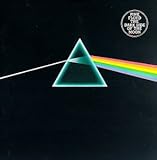
With all the references to the moon,  it will be hard not to think of The Female Man whenever I listen to Pink Floyd’s ‘Dark Side of the Moon’.  Now, I keep thinking of ‘Us and Them’ in terms of Jael’s version of Earth with warring male and female societies.  Try it; it just about fits…

On authorship and Labyrinths: In Response… (Zampano who did you lose?)

…to some of the previous posts:

Reading some of this week’s posts I see that other people are also questioning authorship in HoL as well as the labyrinth-like structure of the text itself. I can’t say I have definitive answers, but here are some of my thoughts on these matters.

I believe that as far as House of Leaves is concerned, “The greatest trick [Danielewski] pulls is convincing the [reader] he doesn’t exist.” Danielewski does an amazing job of creating a work of fiction that seems to be the work of Zampano (does anyone else have issues accenting the ‘o’ in his name?) and Johnny Truant. I like the idea that the reliability of the narrator “doesn’t really matter” as has been said in class, but while browsing through the pages of the book over the weekend I found something very interesting. This Easter egg is not “within the text” so to speak, but is a part of the novel–found on the page of photos directly after the cover. The stained, ink-marked piece of paper on the center of the page is a partial note about the book (This, I now realize, is also in the appendix in full–but I found the one after the cover first, so I’m going to keep that. Sorry, folks, just started looking over the appendices now). It reads

“Note # [indecipherable text] Chapter XII: Perhaps I will alter the whole thing. Kill both children. Murder is a better word. Chad scrambling to escape, almost making it to the front door where Karen waits, until a corner in the foyer suddenly leaps forward and hews the boy in half. At the same time Navidson, by the kitchen, reaches for daisy…arrive a fraction a second too late, his fingers…’ding air, his eyes scratching after Daisy as she…to her death. Let both parents experience that …’eir narcissism find a new object to wither by…’em in infanticide. Drown them in blood.” A note written in red ink below this type-written passage reads “…top primary sense, to wound, tear, pull to pisces.”  Note: The line reads pisces, lowercase, not pieces. (DNE)

This sheds a new light on the authorship. Clearly somebody is creating this tale if they have the power to change the ending. But all the passage–like so many others–really does it create more questions. Is this Danielewski’s note? If so, then Truant could indeed be reliable. The same could be said if it is a Zampano note: Truant could still be reliable, but Zampano’s work would further be established as mostly fiction. Is it Pelafina’s note? As we have seen by reading the appendices, she is deeply troubled. Something in her letters hints that she may have had exposure to this work herself, after all, she appears to be in the state that Johnny himself is heading towards.

I am beginning to believe that the question of authorship is answered in the way Danielewski creates a book where readers constantly question the validity of the text. The text–or the body of materials that constitute the novel–are not concerned with fact or fiction. They cause whoever is in possession of them to devolve into a state of isolation and eventual insanity. Can’t the same be said for us, the readers and critics of this novel? There is nothing for us to do but continue reading as the book deconstructs itself. Does this not lead us to frustration and insanity? As many people have mentioned in their posts, HoL consumes us. We want more time–need more time–to consume the book even as it consumes us. The same thing is happening in the text. Johnny isn’t sure whether he is working with genuine documents–he even says the film doesn’t exist and the footnotes are often fabrications–but he can’t put it down. Neither can we. This is the text messing with us. Hints of this can be found in the fonts used for each character:

Zampano uses Times–he is the reporter who did immense research on the Navidson record and reports it in academic and journalistic style. Truant uses Courier. He is the messenger who brings Zampano’s research to the reader. Pelafina’s font is Dante, which conjurs images of hell, perhaps as a result of coming into contact with the very materials that appear to be sending Johnny on a path towards insanity. The editors–perhaps the only reliable writers in the text–use Bookman because they are literally book men.

These fonts are ultimately the work of House of Leaves’ ultimate author, Danielewski, who places specific hints in the text for the readers. It is clear that this is a work of fiction, but the text seems to be confused by its own state of existence. Sometimes we question its credibility and other times accept what the book’s authors write as credible. This is a text that deconstructs itself before I can even fully formulate my own deconstructing criticism and the use of fonts and subtle hints lead me to question the authenticity and reliability of the text, seemingly around every corner. This shows that the text is fighting this struggle itself–trying to exist even as all signs say it should not. I believe the point Danielewski is tying to make is that credibility and authenticity are not always that important or especially clear cut. After all, Johnny reads Zampano’s text knowing that it is largely a fabrication but still finds himself becoming consumed by the work. So do we, the readers, consume the text–fully aware of its status as fiction–and find ourselves consumed. Here we can see elements of postmodern fiction blurring the lines of authorship, transcending the boundaries of fiction and reality and leaving us saying only, “who cares.”

Another element I will touch on briefly are the mentions of the labyrinth. I was hoping to spend more time writing about this, but I am already well over 500 words, so a note will suffice. I agree that the book is much like a labyrinth that we must negotiate. But my question is this: While a normal labyrinth has many dead-ends, with blocked passages connected to the one that actually leads somewhere, is every passage in House of Leaves really a dead-end? Is the text like this on purpose? Serving as a maze with no entrance and no exit–one that answers any questions we may want to address before we can address them? One that traps characters and readers alike in a state of fear, locked away with a monster we can’t see but know is there? You guys tell me.

This is a comic by XKCD that is fitting for our reading of house of leaves:

An xkcd cartoon using an IHOP menu and heavy HoL inspiration

Confusion of Authorship and the Gothic Novel

I know that as a literature grad student I am supposed to be able to step back and recognize fiction for what it is: made up stories about made up people ( I know that this definition is overly-simplistic, but whatever).  That being said, what I have read in House of Leaves so far seriously creeps me out.  I’ve only managed to read the first 80 pages that were assigned, but I am hooked, and may not get any sleep tonight because I want to know what happens next.  The last time a book freaked me out this much was when I misguidedly read Stepehn King’s It in middle school, alone, at night, and constantly worrying that a killer clown was going to come out from under my bed and do terrible things to me.  A coincidence I noticed was that Bret Easton Ellis offered a blurb praising this book saying that both Thomas Pynchon and Stephen King would want to bow down to Danielewski after reading this book.  It is a coincidence because the three books that pop into my head when I read House of Leaves are It by Stephen King, The Crying of Lot 49 by Pynchon, and Ellis’ Lunar Park.

Lunar Park is probably the book I most think of when I read this because it explores many of the same themes as House of Leaves (although admittedly many years later).  The main two of these themes being the hiding/layering of authorship and the physical house itself as the sourc of terror.  Lunar Park is a book written by Bret Easton Ellis, author of such works as Less than Zero, The Rules of Attraction, and American Psycho, whose protaganist is Bret Easton Ellis, author of such works as Less Than Zero, The Rules of Attraction, and American Psycho. The first sentence of Lunar Park is “You do an awfully good impression of yourself.”  With this sentence, and throughout the novel Ellis attempts to hide/layer the actual authorship of the book by writing about the fictional Bret Easton Ellis writing this book.  The blur between the fictional Ellis’ and the real Ellis’ life are purposefully blurred to the point that his fictional actress wife, Jayne Dennis (I think, I have not read it in awhile), has her own website ( on which she is reported to have formally dated Keanu Reeves……Whoa!).  The novel includes enough actual facts about Ellis’ life that it is hard for the reader to know where the fiction starts and real life begins.  Like many of my classmates, I am so completely caught up in Zampano’s/Truant’s story that I forget that it is all just coming from Danielewski.  I keep feeling like if I stop reading and get on Netflix, I can put the Navidson Record on my queue, and I REALLY want to watch it.  As where Ellis creates the fictional Ellis to hide/confuse authorship, Danielewski manages to completely mask himself and the reader forgets he even exists.

The other thing I noticed was that there seems to be something gothic about this novel’s treatment of the home.  In gothic novels danger/otherness/creepiness shifted from coming from outside the house to coming from within or from the actuall house itself.  This most likely had something to do with Victorian mores about sex according to some scholars, but that is neither here nor there, the house, home or living space generated the otherness/spookiness.   I just thought this was interesting as we have discussed how postmodernism has been a reaction to other modes of literature.  We have mainly discussed how it relates/ contrasts to modernism, but House of Leaves seems to be  a postmodern take on the more traditional gothic novel.

Oh, and if anyone else out there is an Ellis fan, how awesome does the trailer for The Informers look? Spoiler: the answer, pretty awesome.

1/4″, 5/16″ or whatever

I suppose the things that interest me most so far in House of Leaves in no particular order are : the way danielewski plays with the assumptions of genre– here he is hopping in an out of narrative, scholarly journal, confessional, etc. The way the footnotes often overtake the “narrative,” and the subjectivity involved in the order of reading; they do some really cool things. I think it says something about authorial intent/control. danielewski, i suppose, directs us in certain directions, but unlike in the traditional linear narrative, the ultimate decision is left up to us. Kind of like a darker “Choose Your Own Adventure” book, only with less giant squid or space vampires:

You could (presumably as I’ve not finished the entire book yet) theoretically and to a certain extent read all the narrative pieces straight through and then go back to the footnotes, or vice versa, or read them in simultaneously (though at some point(s) you must diverge from one or the other for a page or two…).

What, then is he saying about narration, or authorship? I suppose it could be that he wants stories to tell stories (rather than writers telling stories), thus the book/story reveals itself in its own order/pace, similarly to the mysterious hallway. The parallels, as I think Alana pointed out, between the text and the room/hallway are many. The “overfullness,” the new/multiple arterial pathways, the pacing, the shadow, which exist inside that extra 1/4 (or 5/16)”.

Surprisingly, I’m most interested when danielewski is completely absent from the text — when it is zampano, truant, -Ed.(still detached from danielewski) etc, speaking. but, mentioned by name or not, danielewski does seep in on occasion. In the “spilled coffee” rant by zampano and following commentary by Truant, in which Truant claims he would have just as soon edited the whole thing out if not for fear of (severe paraphrase here) “minimizing all thats left of the old man,” danielewski is too present for my taste. his self-conscious-about-being self-conscious commentary (as zapano as truant as -ED or whatever) breaks the fourth wall….what it boils down to, here in this passage, is a writer commenting on essentially poorly and overlywritten fluff (I know, it serves a purpose here, hear me out) and then calling attention to it, effectively passing the fictitious buck from himself to truant and from truant to a fear of somehow increasing zampanos absence…does that make any sense? probably not. Maybe it’s like an author righting in dialect, only the dialect isnt any good…but he/she justifies it with, “well thats what the character said. thats not on me.” It’s really not the quality of the zampano passage that bothers me…its the way danielewski oversteps his bounds, whether its in someone else’s voice or not.

So, in spite of my lengthy and circuitous complaining, I’m really enjoying this work so far.

Book within a book within a book… and an attempt at Baudrillard

When I’m reading, say, Vonnegut or David Foster Wallace, I’m aware that I’m reading their words throughout the book, often stopping to think how they wrote a certain section or how they might’ve decided on structure or how ideas in the book might go along with the author’s personality or life, like how Vonnegut often writes of WWII or secular humanism, and how David Foster Wallace typically incorporates technology, morality, etc. However, when reading House of Leaves, which I finished this past week while at the conference in Chicago (I skipped a bunch of panels and spent much of the week in my hotel room with the book), I didn’t once think of Danielewski. He had managed to hide himself as author of House of Leaves within the layers of authorship in the book. Of course, I know that it is Danielewski writing about Truant who is writing about Zampano who is writing about Navidson, but in all of this, as I was reading it, the source–the original author–was lost. I’m wondering if this is what Baudrillard is referring to when he talks about the simulacrum replacing the original. I might be totally off here, since I didn’t fully understand Baudrillard’s piece, but it seemed that he was suggesting that the original is lost when the copies become reality, or something to that effect. On top of all the layers of authorship in House of Leaves, you also have the editors and the fake critical sources adding up to a sense of reality, since we generally see critical essays as analysis of something real–why, for instance, would someone analyze something not real, unless the entire analysis is a fabrication… does this make sense?

Whenever Prof. Sample asks if we experienced anything postmodern in our lives the previous week, I never had anything to say, not because I didn’t experience anything “postmodern” but because if I did, I didn’t realize it or didn’t understand it as postmodern. However, when I was in Chicago, I felt for the first time aware of many “postmodern” occurrances. For instance, when my fiance, Lucas, and I first got to our hotel room, we noticed that we had two double beds (which looked more like two twin beds), which was weird for us because we didn’t know what to do with this extra bed. At first we joked that one would be the “eating” bed and the other the “sleeping” bed, but eventually, we each sort of nonverbally claimed a bed. That first night, he was on “his” bed and I was on mine, and we were watching television. There was this show on and in the episode, this couple was forced to sleep on separate beds.  Lucas, as we were watching this couple in their beds on television, said something about how weird it was that we were sort of in the same predicament. But, what was weirder, was that the couple on television turned on their television and saw an old black-and-white television series with a couple in separate beds (back when couples couldn’t sleep in the same bed on tv). So, essentially, Lucas and I, in our separate beds, watched a couple on television in their separate beds as they in turn watched another television couple in their separate beds. My point to this anecdote is that I immediately thought of this class, but it wasn’t until now, when writing this blog, that I made the connection between that experience and the person writing about person writing about person issue (and book within a book within a book) in House of Leaves.

Going back to the authorial tone insofar as the editors and critical writers in the book, there were times when I became so engrossed in the Navidson Record that I gave serious consideration to the footnoted critics and almost forgot that these critics were made up and that the Navidson Record as source material wasn’t real. Again, I’m not sure if this is what Baudrillard is saying when he talks about simulacrum but it seems to make sense, at least in my understanding of the article. Or maybe this could be the simulation, the difference between “imaginary” and “real,” perhaps? But that would be the book itself, too, correct? I think, like the post before me, I seem to have more questions than answers when relating House of Leaves to the other readings for this week. Foucault and Baudrillard aside, I have questions just on House of Leaves–like, for instance, the aforementioned authorship. It had seemed, in the beginning of the book, to be as I stated before–Danielewski writing about Truant who is writing about Zampano who is writing about Navidson–but toward the end this authorship is questioned in two specific scenes; I won’t mention the details of these scenes for those who haven’t finished the book (but for those who have: the song that the band plays and what Navidson uses the matches for), but these two scenes completely threw me off on what I had presumed to be “real,” to use that term loosely, and I almost, briefly, considered rereading at least the first 100 pages or so of the book again. I don’t believe I’ve ever consumed this much writing in this short of time–I’m interested in what others have to say about it! And hopefully someone can clear up Baudrillard and Foucault for me. Funny how when reading these two articles, knowing that they were assigned with House of Leaves and looking for connections, it felt like I was reading the critical writers writing about the Navidson Record.