Women, Science, and Technology

First off, I apologize for this post being a bit late. But it’s fitting because this week we’re looking at technology, and the technology services Verizon provides to some neighborhoods is absolutely terrible and only works intermitently, when it works at all. I’ve been trying to connect all morning and resetting the router can’t fix this problem. So if anyone out there is thinking of switching to Verizon Fios: Don’t.

Since I’m a writer for the American Psychological Association, I thought it would be nice to see what psychologists were saying about women and technology at a time closer to the publication of The Female Man. While this post won’t relate directly to the book, I think it will provide some historical perspective about women, technology, and science. The article I will be discussing is called “Women, Science, and Technology” by Sheila M. Pfafflin and was published in the October issue of  American Psychologist in 1984. This is about 9 years after The Female Man was published, but still 25 years before the present.

The article first points out that women, even back then with a work force prevalence of 45%, were missing from engineering and physical science fields with participation rates as low as 13%. Pfafflin points to four trends for why this is a problem: The equity issue turned women away because they were less likely to be encouraged to pursue careers and develop their talents in science and engineering. Human resource utilization comes from the failure of the equity issue the country then wastes a substantial portion of technical talent (women) which could lead to serious science and tech consequences. Discrimination against women in these fields, back then, further turned them away. And finally, policy-making in these fields, because of the low rate of woman involvement, was being made with low input from women.

I bring this study up, becuase it made me wonder: “Have women ever been participants in the science and technology fields?” What I mean by this, is this is an issue that we still hear about today. For some reason, I thought it was a recent development (like in the last 10 years), but apparently, for different reasons, it was also an issue in 1984. Pfafflin also makes the point that in the late ’70s the rates of women participating in science and technology were even lower. Prior the the ’60s, very few women were staying in the work place past marriage. Was there ever a time when women were participating in the physical sciences and technology more so than they are today? It doesn’t look like it.
While this is certainly cause for concern for social scientists understanding why this is the case, what I see here is really just the same old media trick of making big news out of old news. It seems like there is a new story a month about how women are avoiding science fields at ever increasing rates. How can this possibly be the case? The four things Pfafflin listed as the causes for concern and problems aren’t as big a deal in academia any more. Women are, with increasing frequency, affecting policy. Academic departments are constantly becoming friendly to both genders not to mention other ethnic and minority groups.

All of this is relavent because, while women may not be participating in science and technology fields at the rates some would like to see nowadays, they never really have. This brings us to Janet: “I’ve worked in the mines, on the radio network, on a milk farm, a vegetable farm, and for six weeks as a librarian” (1). It seems here that Russ is fully aware of the limitations and barriers that were facing women around her time (the ones listed by Pfafflin above) and made a simple point: For women to be included in fields typically dominated by men (the radio network, mines and farms) men cannot exist. Maybe that’s the case, but from what I gather from 20 years of psychological research, women have never participated at rates some folks would like to see. Of course, I don’t think there’s much any of us can do about it, because, after all, we’re English majors.

I’m Pro- Strong Women, really! Just not that into Ms. Russ

Look, i love strong women, digital or …analogue? well real. But The Female Man wasn’t my cup of tea.

I suppose the difficulties I had with The Female Man, aside from the obvious shifts and ambiguities in narrative (the vague first persons really dug into my skull, and the story, at that point wasn’t interesting enough for me to pay super-close attention to who the I’s in fact, were) was the fact that for the bulk of the text, there is very little, if any, plot.  I kind of have the feeling that if Russ were to bring this manuscript into a typical workshop, putting the pronoun issues aside, she would get a lot of comments about needing to use the character and situations to drive the plot….it seems that a pretty hefty portion of the novel is spent merely getting the characters to a point at which they can interact. Janet goes from here to there…a few amusing scenes illustrate that shes a fish out of water…Jeannine/Joanna goes here, goes there..etc, all the while declaring their views/positions in this continuum of feminism rather straightforwardly, until finally all or at least 3 of them are together in a world not our own.

Simply as a reader who enjoys sci-fi for its imagination, I was really having a tough time getting into any of these narratives. I know I know…in 1971 there were probably a TON of males which would have been quite accurately depicted by Russ, but the male characters were so over the top to me, a modern day reader, that it was hard for Russ’ points to not feel a little cheapened by those depictions, and (Please, im not a misogynist, or even that chauvinistic I swear!) some of her “asides” or declarations were just a little too overt, as to be cliché ..”My brassiere hurts.” AND YES I KNOW, its TOTALLY unfair for me to read this and apply my modernist views to a book from 3, going on 4 decades past (especially one which WAS seen as controversial, radical, even avant-garde  ) but I do believe a text should be able to stand up somewhere close to as well now as it did when it was published. Sure some details of Gertrude Stein (more recent) or Milton’s (pretty damn old) novels are antiquated, but those themes/ideas which bear the heft of the author’s point are timeless. Too much of The Female Man read, for me, as out of date. This is of course, not to say that feminism is or should be dead, nor is it to imply that women are treated equally anywhere, let alone everywhere, but her methods to illustrate such points just didn’t work for me.  I’m sorry… don’t call me any names.

Questions I had: is there a purpose, and if so, what is it?, to the initial lack of plot and intense focus on character? Im asking this sincerely, not snarkily!

Why did this have to be a sci-fi novel? Would it have been just as effective (or perhaps more effective) in a different genre? Western? Horror? Elvish Fantasy? Again…sincere, not snark.

Female Unity in THE FEMALE MAN

As others have been discussing, I, too, was struck by the “unity” of the women in the novel. There are several instances where Russ presents the idea of a dual-personality. For instance, Laura struggles with her wants and how they differ from societal expectations. (In fact, this idea of duality is clearly displayed as Laura’s name become “Laur” at points when her “other side” is most prominent.) When Joanna (?) discusses how she turned into a man she says that “knowledge is […] the perception of all experience through two sets of eyes, two systems of value, two habits of expectation, almost two minds” (137-138). Alice says “there are always two sides” (165), and Jael suggests that each woman has a Doppelganger (162).  These women, mainly “the J’s”, seem to be compromised of two personalities: the individual they want to be, and the individual resisting society’s pressures and expectations. Each woman seems to have another “self”. Earlier in the novel, this other self seems to be in the form of some sort of spirit. (The “I” is confusing here, as its unclear if the spirit “I” is the other self of the same woman, or another woman all together. For instance, the “I” in the scene when Janet and Laura first become physically intimate seems to be some sort of an observant conscience of Janet.)

Throughout the novel I thought of Adrienne Rich’s poetry and her themes of the unity of all women. Like Karin, I found the multiple pronouns to be very confusing at times, but I do think that Russ is saying something about the unity of women, just as Rich does in her poetry. Both Russ and Rich use pronouns in such a way as to emphasize the solidarity of women and the shared female experience. 


Along with my frustration with the shifting point of view that I could not always follow (I really feel that I lost whatever grip I had with the introduction of Jael), I also had a love-hate relationship with Russ’s style. I enjoyed Russ’s acknowledgement of social expectations and their incorporation throughout the novel, such as on page 65 when she repeatedly states, “everyone knows”, adding emphasis to these stereotypes and expectations. I enjoyed Laura’s rebellion against “The Man” (65).  I want a better understanding of the point of view changes, though. I also don’t understand why Russ uses what seem to be sub-chapters within her chapters and I’m curious as to the significance of this choice. I’m also curious about the significance of the moon. Jeannine and Janet’s first words were “see the moon,” and the moon comes up at other points in the novel.


As others have posted, I agree that in some ways The House of Leaves seems to have prepared us for the journey into The Female Man.  I have to admit that I did find it to be a challenge, though, and I feel that I’m left with more many more questions than I have opinions and arguments.

Characters and Satirical Experiment

Like a couple people mentioned before, the J-characters in this novel seem to represent different aspects of the female psyche: Jeanine seems to play the role of want-to-be submissive housewife, Janet portrays a rational and scientific mind, Jael represents a violent rebel and would-be conqueror, and Joanna seems to be the contemplative observer.  As the writer and a character in the novel, I think that Joanna’s sensibilities present her as the most fully human character in the novel; that is, she seems the most realistic, and while she does not always appear as an agent of action she seems aware of and has more access to other perspectives and possibilities (perhaps I’m attributing too much of Joanna, the writer and creator of the world and everything in it, to Joanna the character).  All of the major characters, including Joanna, seem to be extremes: overly submissive, overly rational, overly aggressive, overly meditative.  Their extremes make them more into archetypes than characters, inorganic representations rather than organic people.

These archetypes of female possibility, the fragmented structure of the novel, the intense interest in feminine and masculine identity, and the meta-fictional aspects of the novel draw attention to the work as an artificial construction.  Science fiction does not always draw attention to itself as artificial; most times in sci-fi, we give ourselves over to willing suspension of disbelief and simply accept that the mechanics of the world are different.  This novel draws does not disguise the fact that Russ is using the sci-fi genre as a platform for experimenting and investigating gender identity.  I think that Anastasia and Alyssa are correct in reading the novel as a satire or parody since these forms of writing usually depend on generalizations.  How can Russ not be poking fun at gender constructions when she lists in quick succession the names of women whose identities are imbedded right in the name? (“…Clarissa, who will commit suicide…” I think is a reference to the title character of the novel Mrs. Dalloway by Virginia Woolf, a modern writer and feminist (34).)

Anastasia and Alyssa’s comments remind me of the Toni Morrsion book Playing in the Dark, which I read an excerpt from recently in my theory class.  One of the things that Morrison insists upon is that she recognizes that African American voices are marginalized in literary scholarship, but she does not want to trade a white Euro-centric perspective for a strictly African or African American perspective.  Both white and black need to be acknowledged to understand one another, just as female and male are needed to understand one another (Janet Evanson might disagree with me, but in our world of two sexes, two genders, both must be incorporated in the whole of humanity).  I think that Russ comes to a similar conclusion at the end of Female Man when Jael’s crusade to overthrow male domination comes across as extreme and just trading misogyny for misandry.  While much of post-modern literature is inconclusive (I don’t think that Joanna formally allies herself with Jael and her war plans) I think we are right to question the anti-male domination view at the end.

Assumptions and Cyborgs

What impressed me most about The Female Man was the way Whileaway made me aware of my own habitual assumptions.  Every time Janet would describe another aspect of life on Whileaway, describe another work category, I would have to stop short and reassess my automatic subconscious default provisional assignment of male gender.  When Janet described riding on a train and mentioned the engineer, I assumed the engineer was male (80).  I don’t know why it was so hard for me to remember that everyone was a woman – no really, everyone!  But my brain kept trying to revert to the provisional assumption of masculinity for any person whose gender was not explicitly stated.  Of course, one other solution to this assumption of maleness is to make the category of man available to women as well, as Russ asserts on page 140: “If we are all Mankind, it follows to my interested and beady little eyes, that I too am a Man and not at all a Woman.”  This statement reminds me of the way that Susan B. Anthony by trying to vote herself challenged the implicit male assumptions in the categories of “person” and “citizen” in the Fourteenth Amendment’s granting of the right to vote.

One thing that puzzled me about Jael’s world was how the women still gave male babies to the men.  Assuming the women have some kind of semen stockpile and have not advanced to genetic engineering, why would they give their enemy the very means of continuing themselves?  The only answer I could see was that the women had an essential view of men as enemies – even baby men were still men and therefore enemies.  Therefore nurturing them and indoctrinating them would presumably serve no purpose.  Except for Davy (and who knows how common he is) and perhaps commerce, the women are not portrayed as desiring or needing the opposite gender or perpetuating gender roles like the men are.  In making the male society so crude and disagreeable, Russ is creating a parody of the normal state of gender roles.  Taken to the extreme, it’s easy to see how gender roles are only perpetuated by the males who benefit by them.  Yet the women are no saints either, and their hatred leads first to the creation and perpetuation of the awful male society and ultimately, as Jael implies, to genocide.

Whileaway society definitely echoed aspects of Haraway’s cyborg utopia, and certainly the skill with induction helmets and other aspects of technology reflected the “intense pleasure in skill, machine skill, ceas[ing] to be a sin , but an aspect of embodiment” (180).  Although Haraway’s vision of a cyborg worldview seems a utopia, she convinced me pretty well that cyborg imagery is a good place to start to escape the divisive use of dualisms and navigate our discourse more effectively and happily.  Perhaps with a cyborg worldview, I wouldn’t make those assumptions of provisional male gender.  Although cyborg theory itself is a totalizing theory (which Haraway condemns) in that she implies that everyone can be a cyborg, the extremely adaptive nature of cyborgs mean that cyborg theory in Haraway’s view will never be limiting or exclusionary.

Role Reversals

Going off of the points made in “a misandristic proposal,” I sometimes found it hard to side with the women towards the end of the novel.  At the end, the book’s message seems more woman based than society based.  Although I am a woman and can sympathize with the plight to become a less oppressed sex, I am also a humanitarian.  The turning point for me, where this book stopped being about the possibility of a Utopian community where women are free of oppression, was with the introduction of Davy.  Davy, until we realize he is a machine, acts as the perfect subject for Jael’s misandristically driven motives.

  Throughout most of the novel men are the voyeurs, watching the women and objectifying them with their gaze.  Joanna, Janet, and even Jeannine are often disgusted with the men that crudely attempt to court them.  They do not enjoy being looked at by these men, because the often only looked at as sexual objects, rather than intelligent, meaningful humans.  At the beginning of Jael and Davy’s sex scene, the previous roles of voyeur and voyee are totally reversed: “I passed into his room barefoot and watched him cured in sleep, unconscious, the golden veils of his eyelashes shadowing his cheeks…” (196).  Jael objectifys him, seduces him, and uses him until she is satisfied and goes off to handle business with the three Js.

Jael refers to Davy with diminutive terms, such as “little Davy,” which is another illustration of a role reversal between the sexes.  In our male-dominated society, diminutive terms are typically reserved for babies and women, to show small, weak, and insignificant they are.  In Jael’s world, these type of word seems to be reserved for the male house-pets.  To complete the role reversal, the sex scene is finalized with Jael’s actually penetration of Davy: “that time I made him com by slipping my finger up his anus” (197).  So much for Frued’s idea of penis envy.  The penis has been reduced to a pleasure tool, that will eventually be eliminated entirely for the vibrators found in Janet’s world.

Men in Jael’s land are machines that live to serve.   Davy is a mere puppy, controlled by “the implants in his brain” (199).  It becomes clear that Jael does not simply want equality between the sexes, she wants totality.  Woman as the sole rulers of the world.  But Jael doesn’t stop there.  She doesn’t just want one world, she seems to want women to have all of them.  Although the conclusion of the novel does not spell out Jael’s plans, it does appear that she wishes to have soldiers on other worlds, which would inevitably lead to new wars. 

By the end, I wasn’t sure what to make of Jael’s intentions and the creation of Janet’s world.  I had previously found Janet’s world appealing.  Like Janet, I was disturbed by Jael’s new information about how her world came to be.  In a way, all the Js are feminists, but in varying degrees and temperaments.  Perhaps the novel is cautioning us against extremist views like Jael’s.  If this is the case, then Janet would be our herione.  She is a fair feminist who knows when it has gone too far.  She walks away from Jael’s plan to destroy the men, possibly altering the future of her own world and ending her women’s eutopia.

A Misandristic Proposal

What is the opposite of misogynyMisanthropy?  No, that’s the dislike of humankind in general, rather than the specific dislike of males.  Try again.  Misandry is the word.  As I type it into Microsoft Word and hit the spacebar, it becomes underlined in red.  Misspelled?  Quite possibly.  No, a quick trip to the Oxford English dictionary confirms spelling and definition.  So misandry simply isn’t recognized by Microsoft technology.  It’s unfamiliar.  It’s defamiliar.  Perhaps, this just represents one of many omitted words and names, or maybe it signifies something greater and more telling about (wo)men and technology.  Regardless, it offers point of entry into discussing Joanna Russ’ The Female Man.

Though Russ’ The Female Man can fit into many classifications of literature (e.g. postmodern fiction, science fiction, a feminist work, etc.), I am interested in how it functions as a satire.  At the end of the text, Jael proposes the women (Janet, Jeannine, and Joanna) “do business with [Jael’s] Womanland” (211) and to incorporate women soldiers from each of their individual realities to wage war on the men.  Jeannine and Joanna quickly acquiesce.  Jeannie states, “‘Oh sure, I don’t mind.  You can bring in all the soldiers you want.  You can take the whole place over; I wish you would’” (Russ 211).  The response is pert and off-the-cuff.  Oh sure.  Why not? Well, why not?

Janet, the woman from the all-female Whileaway, alone, resists.  Moreover, she refuses Jael’s retelling of the plague as an act of female aggression.  It is unclear whether this resistance comes from inexperience with males, stupidity, or a more simplistic view of conflict resolution (or perhaps, like Microsoft, Janet does not have a word for this construct).  Still, we don’t know why she would resist or why anyone should resist?  At first glance, it seems perfectly logical.

What’s wrong with a rebalancing of power?  In Jeannine and Joann’s worlds, when woman are not being infantilized by the men in the text, they are being raped or arranging their lives so that they won’t be vulnerable to rape.  Clearly, a master-slave relationship is at work, dominating the women at every opportunity, denying them “adult independence—namely money” (118).  It is only through technology that Whileaway and Womanland the women regain their power.  Why not take this to the next level?

Given the endless possibilities of technology, an inter-dimensional war with men may throw the balance of power in favor of the women.  Most of the characters find that idea fairly attractive.  In fact, Jael’s logic reflects that of an oppressed people made free.  Rather than preach the ills of subjection, the free must, in turn, oppress to maintain their freedom.  Freedom cannot exist without oppression; oppression cannot exist without freedom.  On second glance, it simply replaces one societal ill with another: misandry with misogyny.  So what’s the point of this exercise?  By promoting misandry, The Female Man would undercut all its previous points about the master-slave power in male-female relations.  But it doesn’t just do that.  Misandry defamiliarizes misogyny.  It gives us a new word, a new point of reference, a new context to highlight an old referential.

A Little on Structure, Tone and Treatment of Time

You’d think after reading House of Leaves we’d all find the weird and erratic narrative structure of The Female Man a piece if cake.  I personally had trouble understanding some parts of it, and the multiple narrators and the ambiguous “I” got me very confused at certain points.  I don’t know if the division of the narrative into so many passages, pointing the shifts in times and places helped make it easier or made it more confusing.  One thing I notice about the structure is its division into 9 parts; an interesting choice Russ makes, since the number nine is usually associated with maternity and, perhaps, femininity.  In her demonstrations of possible worlds where the boundaries of gender are destroyed, there is only one thing females have that males still can’t have: babies!  Women in Whileaway are able to conceive without needing male partners, while men in the other three worlds can’t make their own babies.

 I find the ironic and aggressive tone of the book to be interesting.  Russ is very much in your face, and I can imagine it being a buzz killer for some readers.  She is really funny when she’s being ironically bitter. My personal favorite is on page 148:

Narrator to Jeannine on the danger of communication device: “It will explode in your brains and drive you crazy.  You will never be the same again.  You will be lost to respectability and decency and decorum and dependency and all sorts of other nice, normal things beginning with a D… You will be dead, dead, dead.”

With an emphasis on the D’s, I see an implied association between these things starting with a D and men.  Jeannine is also threatened by her relationship with her boyfriend and struggles throughout the book to find her independence.  “Dead, dead, dead” confirms the association, as men are all dead in Janet’s world.  This makes me even more curious about the J’s and what it means to give all four female characters names that start with a J. 

Finally, I want to briefly mention an important point the narrator makes in Part One- VI where she begins to introduce Whileaway to the reader.  She explains that since there might be an infinite number of possible universes, and that there isn’t a single and clear line of probability, “the paradox of time travel ceases to exist, for the past one visits is never one’s own Past but always somebody else’s; or rather, one’s visit to the Past instantly creates another Present” (7).  I think this and the rest of the passage says a lot about the treatment of time in postmodern works.  Modernist writers, as Virginia Woolf, talk about the importance of time in manifesting realism in literature and explain that time is not linear, but must take the reader to the past as well as the present to provide insight on the histories of the characters, giving them a more realistic portrayal.   Postmodernism takes this principle to a different level, as the treatment of time is more imaginative.  It attempts to explore several possible pasts, presents and futures, and therefore generating numerous realities.  The importance modernism places on the concept of realism is not only absent in postmodernism but is disparaged and rejected through this use of inconsistent and multiple time lines. 

Authorship, Cyborgs

“I am the author and I know,” Russ says on page 165. If, as Karin and Jael propose, all four women are the same woman, made different by their external circumstances, it seems to contradict the idea that women only appear to be the same because their circumstances repress them to the level of household objects. Maybe the four women are not the same person representing one-dimensional sides of a conflicted self, but they are just different possibilities of the same person, upon which each woman’s bizarre circumstances have shaped her so that other possibilities of herself are strange and horrifying to her (the murderous one, the lesbian, the repressed wannabe-housewife).

By claiming she is the author, Joanna Russ asserts her control over the text, but also shows the complications and uncertainties underlying that control. The alter egos filter through in interchanging blurbs. Jeannine says, on page 122, “Who am I, what am I, what do I want, where do I go, what world is this?” I think the multiple realities and personalities the J’s find themselves faced with represent the feeling of dissociation present in real life. This disjointedness and confusion is represented by the jumbled, fragmented structure, which Alana commented on earlier.

Also, as Anthony brought up, there seems to be an idea of self-criticism and self-deprecation, as well as multiple layers of authorship. There is the recurring question: “I know what I am, but what’s my brand name?” (174), and an unending search for self-identification in the midst of multiple dehumanized worlds. The book as a whole, which acknowledges its author and offers its own harsh criticism, is as self-aware, self-effacing, and confused as its characters are.

Examples of dehumanization are both literal and symbolic.  Almost every conversation between a man and woman is infuriating and results in the complete ignorance or mishearing of the woman’s words. This happens, too, between women, as in the conversation on page 113-114, where Jeannine’s words are misheard but unnoticed anyway. Russ seems to grapple with how one can possibly be his/her own person, or even a person at all, in the face of oppression. And of course, the cyborgs are literally dehumanized.

Speaking of cyborgs, what do people think about the half-changed people in Manworld? And does anyone quite know what to make of Davy, the robot/sex toy Jael has? He’s this ultimately dehumanized man in the middle of a book where women are the ones who are constantly objectified. Thinking about it more, I realized that while women are the main characters, men are also dehumanized stereotypes. She kind of takes the humanness out of everyone, and gets away with it because she’s created all these alternate worlds. But men are so oddly one-dimensional, except maybe Cal, who is strangely complicated and conflicted, both generically repressive and oversensitive. And then here comes this beautiful objectified robot-man? What are we supposed to get from all of this?


Also, on the topic of women and technology in the news, here’s an article from the Washington Post yesterday, called “Limbaugh, the Vatican and a Woman’s Place”: http://newsweek.washingtonpost.com/onfaith/georgetown/2009/03/limbaugh_the_vatican_and_a_womans_place.html.

The article is very short, but touches on a lot of nerves (women’s rights, Catholicism, political affiliation). Some passionate user comments follow.

Transitioning from Danielewski to Russ

So, I’m relaxing over spring break, recovering from the marathon that was Danielewski’s House of Leaves (thoroughly enjoyed nonetheless), and I start in on Joanna Russ’ The Female Man.  After having finished the novel (shall we call it a novel?) a week later, I reflect.  At times I thought the book was brilliant; the subversion of the science fiction, manipulating the genre to fit what she was trying to address on the feminist ‘front’, was outstanding.  The Faulknerian use of stream of consciousness and first-person narration is also commendable.  But then there were parts of the novel that became burdensome for me; in other words, at a certain point, I felt like the book’s entire discussion (the question of a woman’s role/freedom/right [I hesitate to provide a label for fear of a Jael-like counterattack] in the world) became repetitive; and I would guess if you go searching for criticism against The Female Man you might find a similar complaint somewhere…

…but really you don’t have to look any further than the book itself:

Shrill . . . vituperative . . . no concern for the future of society . . . maunderings of antiquated feminism . . . selfish femlib . . . need a good lay . . . this shapeless book . . . of course a calm and objective discussion is beyond . . . twisted, neurotic . . . some truth buried in a largely hysterical . . . [and so on and so forth]. (140-41)

Within the book, Joanna Russ has provided the reader with criticism for the book: The Female Man is its own worst critic.  What does this tell us about Joanna Russ and her intentions?  Is she mocking these critical voices; drawing attention to the very biases that they reinforce?  Is this critical inclusion a form of self-deprecation of her novel?  Is it a little bit of both?

Whatever answers we might conclude to these questions, this section of the book got me thinking about Danielewski.  Of course, after three weeks of House of Leaves, we are all familiar with Danielewski’s tactics, his self-proclaimed preemptive strike against any form of literary criticism, or any attempt to disassemble the book.  I’m not necessarily suggesting that Joanna Russ was trying to actively prevent criticism like Danielewski is, but she is certainly anticipating responses towards the book.

With House of Leaves already in the discussion, I also thought of another interesting comparison between the two authors.  With the construction of numerous levels of ‘authorship’ (i.e. Zampano and Johnny Truant), Danielewski effectively ‘distances’ himself from the text.  Conversely, Joanna Russ eliminates any separation between her and The Female Man by identifying herself in the book as both character and author, crossing the conventional line between author and text.  I wonder what this accomplishes for the book.  As the ‘1970s feminist trying to succeed in a man’s world’, what can we say about The Female Man Joanna and the author Joanna?  I’m thinking it’s important to remember that  she is only one of the four female ‘representations’ in the book.

…As you can tell, this book has left me with more questions than it has provided answers.

Side-note:

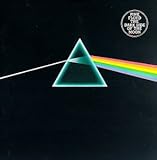
With all the references to the moon,  it will be hard not to think of The Female Man whenever I listen to Pink Floyd’s ‘Dark Side of the Moon’.  Now, I keep thinking of ‘Us and Them’ in terms of Jael’s version of Earth with warring male and female societies.  Try it; it just about fits…

Freud, Sex in the City, The Female Man, and Google

I am struck my the ever-shifting pronoun usage in this book.  I can’t keep up–I, me, us, we.  Who are these women?  Clearly they have separate identities, but often they appear as one.   In part three, Joanna takes Janet to a party; this section appears to be laden with one of the first instances of  narrator disorientation.  Joanna introduces Janet to her friends (whose names unexplainably all end in -issa) at the party as her Swedish cousin.  Janet quickly enters into a discussion with the Ginger Mustache.  From this point on in the chapter, the pronoun references are muttled.  “She showed him all her teeth.  He saw a simile.  […] and he took us by the wrist.[…] ‘Let me go’ said Janet.[…] All this time he was nuzzling her ear and I was showing my distaste by shrinking terrified into a corner, one eye on the party.[…] enfolding us in his powerful arms (emphasis added 45).  How can Joanna be observing Janet talking and then refer to her as part of herself?  

After this section, I was left wondering if they in fact are just one woman inhabited by many.  Come to think of it, Cal even acknowledges this morphing when he says to Jeannine on page four, “The vanishing woman [referring to Janet]. That’s you.”  She doesn’t deny it.  Just for the sake of experimentation, I can’t help but try out the theory that they are actually one woman.  I have heard it said that the four woman on Sex and the City aren’t really four distinct women, but rather alter egos of Carrie: Miranda, the career-driven one, Charlotte, the uptight prude, and Samantha the over-sexualized woman. While the stereotypes don’t align perfectly with Joanna, the fiercely independent 1970’s feminist, we have Jeannine, the mild-mannered woman waiting to marry; Janet, the futuristic Whilawayean who challenges all gender stereotypes; and Jael the warrior.  So instead of Sex and the City, couldn’t these women in The Female Man be parts of Freud’s theory of the id? If I had to label the id, the unconscious pleasure or need of instant gratification, it may be Janet in her sexual desires for other women, or her Jael in her animalist tendencies.  The ego, whose job is conscious and ready to mediate between the id and superego, may be Joanna as she tries to explain society to Janet.   And the superego, who seeks to act in socially appropriate ways, may be Jeannine confined by her expectations to her family, to herself, to society to marry, to make something of her life.  Again, not a perfect fit, but it might prove to be useful in our discussions.  


To the question about Women in Technology:  

Here is a NYT piece on Marissa Mayer, 33 year-old first female engineer for Google and now VP of search product and user experience.  I thought the angle of this piece was fascinating.  It didn’t just report on her work, but dabbled into the personal, including what her apartment looks like, the talk shows on which she appears, her hobbies, her Yelp interviews, etc.  Mayer herself seems to be spearheading her own publicity, but I find it fascinating.  

http://www.nytimes.com/2009/03/01/business/01marissa.html?pagewanted=1&_r=1

Here is another article about her from a San Francisco paper:

http://www.sanfranmag.com/story/adventures-marissa

After these articles appeared, Gawker ruthlessly tore Mayer and the articles apart.  

http://gawker.com/5162532/marissa-mayer-googles-biggest-failure

Harlequin romances equilvalent to Mills & Boon?

That might be the funniest thing about this article.

I read an earlier essay version of this chapter in a feminist criticism anthology for a class last semester, so it was interesting to see how Haraway changed her approach from the essay to the chapter.

I think one of the challenges to reading this chapter is getting a handle on Haraway’s envisioning of cyborgs. Haraway writes: “by the late twentieth century, our time, a mythic time, we are all chimeras, theorized and fabricated hybrids of machine and organism: in short, we are hybrids” (Haraway 150). I don’t think that Haraway is talking about literal cyborgization (although that’s becoming more a reality, in particular I’m thinking of the new prosthetic limbs developed by military medical researchers that are controlled by electrical pulses in the remaining muscle tissue) but more about the way we function and utilize machines. However, I think Haraway’s essay needs to come with a few more caveats. It seems to me that Haraway’s envisioning of the cybernetic/cyborg future is an extremely limited one in terms of really only applying to certain societies, namely Western/technologically integrated ones. I think it is an overgeneralization to claim that there is a universal cyborgization of global society.

That being said, Haraway has some fascinating things to say about “women’s work.” She points out the global changes in employment/industrial trends and how the global workforce is becoming increasingly “feminized.” I think this is useful to discuss in counterpoint to Russ’ book because of the conflict between Janet’s idea of work (on Whileaway everything is of necessity women’s work) to the ideas about employment expressed by Jeannine and Joanna.

What I found rather ironic was the juxtaposition of Haraway’s assertion that “there is nothing about being ‘female’ that naturally binds us” (Haraway 155) and her argument that earlier feminists’ eagerness to create a universalizing feminism was actually totalizing contrasted with the dedication in Russ’ book: “this book is dedicated to Anne, to Mary, and to the other one and three-quarters billions of us.” Still, I would argue that even if the drive to create a universal or “global” feminism (for which, of course, Western educated and largely white middle/upper middle class women would serve as the spokespersons) is in fact imperialist, it was mostly born out of political necessity-a movement that lent itself to getting coopted by other groups for other means and ultimately capitalized upon.

But going back to The Female Man, one thing I’m very interested in discussing is why Russ structures the book the way she does? This sort of narrative-slippage and constant digression seems rather typical of the postmodernist literary aesthetic now, but I imagine that it was rather revolutionary (or at least less expected) at the time of its publication. So why would Russ structure the book as what seems to be a series of argument and exchanges between the four characters rather than a linear narrative?

But does it come with Bluetooth?

Technology in the Female Man

In the Harraway article that we read she expresses hope in the possibility that we can be saved if we all learn to live as cyborgs,  a blending of the human and the machine.  Joanna Russ would appear to agree with this idea as her Utopian society Whileaway in The Female Man is made up almost entirely of cyborgs.

The people on Whileaway are trained to become one with technology from birth, and eventually it becomes a part of them.  Although its description seems rustic and pastoral, the society of Whileaway is only possible through their use of and coexistence with technology.  I have no idea what an induction helmet is, but it must be pretty awesome if “with their induction helmets on their heads, their toes controlling the green peas, their fingers the vats and controls, their back muscles the carrots, their abdomens the water supply,” (51).  Not to mention that at some point they figured out how to not only have babies without any males, but to genetically modify those babies to an almost perfection.

My question is this:  Is technology necessary to conquer nature?  Not only trees and butterflies nature, but human nature, or more specifically female nature?  Russ spends a great deal of time explaining to us that the idea of “female nature” or “maternal instincts” are just social constructs that are meant as a mode of domination by males (and other females as well).  Men in the novel constantly assume that it is part of a woman’s DNA that she will be happy with pretty clothes, or that all she wants to do is sit on the couch and eat bon bons while her husband Climbs Everest (what is a bon bon anyway? I’ve always wondered that).  So why is it so necessary that technology be so ingrained in her idea of a utopia.  Women are only seen as strong enough to exist on their own  on Whileaway, and only with the help of all their technology.

Janet would be considered the most advanced J, or most enlightened, in a way.  However, her and the rest of the people on Whileaway are completely dependent on advances in technology to survive.  Jael would be the strongest J physically, and the one could argue the toughest.  However, she relies on her robot boy-toy for pleasure.  Also, the women of Womenland are dependant on technlogiocal advances to survive using it as a means of commerce, namely baby farming and time travel.  Jeannine seems to be the most connected to nature, with her cat (Mr. Frosty!) and her plant, but she seems to be the weakest of the J’s to me.

If Russ was attempting to get across the point that women can do whatever men could do and that the differences between the sexes is illusory, why this emphasis on technology?

I may have completely misread the novel.  I am assuming that Whileaway is meant to be  a utopia.  It is possible that it was not meant to be and therefore everything I said above would be pretty much worthless.

No unintentional errors, huh?

What about…

Page 119: “Nothing there provides a reason to linger. In part because not one object, let alone fixture or other manner of finish work has ever been discovered there.”

Shouldn’t that say “finished”?

Page 145, Footnote 189: “A sperm twixt another form of similar unity, and look there’s an echo at haand.” There’s no way he meant haand. It’s “at hand.”

Page 146: “when he highlights Barthe’s observation…” His name is Barthes. Possessive would make it “Barthes’.”

Page 162: “It looks like its impossible to leave a lasting trace here” Should be “it’s.”

Page 320: “Regrettably, Tom fails to stop at a sip. A few hours later he has finished off the whole fifth as well as half a bottle of wine. He might have spent all night drinking had exhaustion not caught up with me.” Who is the “me” here? There are no quotes and no footnote to indicate that it’s from an interview. Maybe I missed something though…

Anyway, I’d be interested to see how Danielewski can justify these errors as intentional…

That’s it for now. :) I didn’t actually set out to find these errors; I just marked the pages as I was reading.

I’ll let you know if I find others.

Have a great spring break!

MZD Interview

As much as I enjoyed House of Leaves, paying as close attention as I could to all the details regarding Johnny, Navy, Zampano, Pelafina, etc., as well as paying attention to the dense layers of “reality,” there was one layer of the book that eluded me while reading it that now I realize, after reading the interview with Danielewski, should have been glaringly obvious. I mentioned in a previous post that I didn’t think once of MZD the entire time I read HOL. But now I’m wondering… well, the story of Navidson gives us insight into the character of Zampano, the treatment of and reaction to Zampano’s text gives us insight into Johnny Truant, and by the same logic, this work of fiction (as all works of fiction, do to some extent) should give a lot of insight into who MZD himself is, and that has me wondering if that wasn’t the point all along. I don’t mean who he is as a writer, but who he is a person… his history, his fears, his hopes, and in particular his relationship to his father and how it has shaped him.

I’m almost tempted to reread the book (ha) with this new layer, the ultimately real (or “real” or Real) layer, firmly in my mind. Hearing about MZD’s father, his childhood, finding out that the Pelican Poems are as much  MZD’s  (insofar as MZD writing them years before when traveling in Europe as a kid) as they are Truant’s (or were these Zampano’s poems? I forget) , made me realize how much of the book is very much about MZD and makes me feel like he was trying to tell me that all along through the story within a story within a story device.

I also found it interesting that Danielewski didn’t expect the readers to read the letters to Truant from his mother until after. In other words, he thought that most readers would wait to read them rather than stop in the middle of the Navidson Record to check out the letters at the end. In the interview, he said that there’s two different entrances to the text based on what you choose.

By the way, I also just added La Strada to my netflix queue, to delve deeper into the character of the mysterious Zampano who may be transplanted from another work of fiction by a different author, which makes the character simultaneously more and less real at the same time.

Having no had no feel for who MZD really is prior to my reading this interview (except that he had a somewhat famous sister), I found the whole thing fascinating. It really read to me as a continuation of HoL itself.

The Check Mark

I was feeling a little ambitious and was trying to finish the book before I wrote this post, but due to my spontaneous napping that this book is inducing, I still have but a few pages to go. I decided to go by Suzanna’s advice and skip straight to the end to read Pelafina’s  letters to her son, Johnny, before continuing to read further.  These letters shed light on his past and certainly helps me with understanding his character better.  Aside from the emotional and psychological baggage that must have come along the broken home and the physical abuse he had to endure as a child, which I don’t feel like delving into, we also learn about his intelligence and talent with words that is reflected in his mother’s reaction to his writing.  Yet, reading through the letters did not give me the satisfaction I needed because there is always the question of credibility that we all seem to enjoy pondering upon.  We learn about this abuse as a child by his foster parent through his mother’s response when he tells her in one of his letters, as well as in his own narration, but are we expected to necessarily believe what he tells his mother and his reader? The more I read the more it seems like he intentionally wants his reader to be skeptical of his stories, like in page 108 when he tells his story about being hit by a truck and immediately negates it detail by detail.  And I know I’m going too far with this, but could the whole pack of letters be another one of the fictional texts in the book that is claimed to exist?  Another thing that the letters helped me notice is the check sign at the bottom right of page 97.  In the letters we learn that Pelafina tries to communicate in secrecy with Johnny by asking him to sign a check at the bottom right to confirm that he has read her letters, and so its appearance in this page raises some questions about why it’s there.  I believe it bares some relation to the quote taken from the OED, which his mother supposedly gave him to encourage his writing (sorry, but everything in this book I am forced to take as a supposition) of the definition of SOS that opens that chapter, which, correspondingly, is another signal used for communication.  Is he using this method to manifest communication with someone? Who may that be and why?  I could be imagining this but I think someone suggested in the blog that Johnny’s mother could be the ultimate narrator of this book.  If we look at it that way then do we take it as an indication of her role as narrator? It is also possible that this check mark carries no significance except that it is used to put off the readers and mess with their heads at 5 in the morning.  It could be another one of those red herrings that we’ve been getting a lot of in these postmodern texts.  

Thoughts on Zampano and Johnny

I will preface my post this week with the fact that I haven’t quite finished House of Leaves yet.  As much as I am enjoying the book, I’m finding it to be a slow read; evidently, navigating through the maze is equally as difficult for me as a reader as it is for Navidson and Holloway to manage the haunted hallways, or Zampano and Johnny Truant to survive The Navidson Record.

As I continue to make my way through the The Navidson Record, it is interesting to reflect on the relationship between Zampano’s footnotes and Johnny Truant’s ‘narration’.  As stated early by Johnny in The Navidson Record, the book evidently drove Zampano to his grave, and Johnny Truant appears to be following in Zampano’s footsteps through his increasingly self-imposed isolation.  But both of their collections of footnotes in The Navidson Record serve very different roles within House of Leaves.  Zampano’s ‘scholarly’ notes are ‘informative’ and relevant to the Navidson text (obviously some if not the majority of Zampano’s notes are actually fabricated, but are still written to ‘inform’ the text).  Conversely, Johnny Truant’s rants often have little or nothing to do with what is found in The Navidson Record.  With this information, what can we say about the two?  If we were to conceptualize the two, could Zampano come to represent order, or at least the desire for a kind of structure?  On the other hand, Johnny Truant constantly disqualifies Zampano’s references, and narrates these fantastic side-stories.  Thus, could Truant’s tangents represents a kind of confirmation of the chaos found in The Navidson Record?  Like the explorers of the ever-changing hallways, Zampano tries to make sense out of the senseless, and even when this fails, he fabricates this order; while Johnny seems content in weaving his own labyrinth of chaotic, autobiographical storytelling.

With these basic differences between Zampano and Johnny identified, could we begin to consider these writers in relation to the division between modernism and postmodernism (albeit as very broad generalizations)?  Where Zampano would attempt to impose an order/structure on the world/film/haunted house (modern), Johnny Truant participates in this chaotic atmosphere (postmodern)

Again, I haven’t finished House of Leaves, therefore, this blog serves as a kind of brainstorm for my thoughts as I continue my way through the latter part of the book.  Even as Danielewski seems to be intentionally limiting avenues for critical inspection, I think this comparison between Zampano and Johnny could be useful.

A Side Note on Danielewski’s Only Revolutions:

If you are thoroughly enjoying House of Leaves (as I am), I’d suggest checking out his following work Only Revolutions. I haven’t read it yet, but I found this interesting discussion with Danielewski on Only Revolutions.  I know it doesn’t directly relate to House of Leaves, but it’s interesting to listen to him explain the basic concepts for the structure of Only Revolutions.  Clearly with both books, Danielewski is very concerned with the typography, visual landscape, and textual labyrinth both works present. Mark Z. Danielewski on Only Revolutions.

Mark Danielewski can read your mind.

At this point, I really believe that Mark Danielewski is either a mastermind or a maniac. I really don’t remember ever experiencing a book like House of Leaves before. So far, it has been one of the most interactive reading experiences I’ve had! I also finally found the “best” way to read/conquer it (other people may have differing viewpoints): I began reading at the very beginning, and tried really hard not to think about the fact that it is 700 pages long. I followed the pages in sequential order. When I come across a footnote, I read the footnote and then returned to where I left off in the text. When directed to an appendix, I read the appendix (but not always too carefully unless it was really interesting) then returned to where I left off in the text. I found that way of reading it less daunting than, say, if I were to read all the footnotes separately after finishing the novel. Although Danielewski doesn’t instruct the reader to read in this way directly (or any other particular way) , the novel’s recursive structure (the interweaving of the different narrators throughout) forces the reader to get involved with all the different plots simultaneously, and therefore implicitly encourages this reading.

The experience of reading this book really got me interested in the relationship between author and reader in a postmodern work, and how it can be distinguished from that relationship in the context of different literary genres. More than any other genre, postmodern writing encourages the reader to read actively and interact with the text on a continual basis (even in a physical sense—turning the book upside down and using mirrors, for example). Besides the heightened level of interactivity, House of Leaves also often communicates to the reader an introspective thought that the reader may already have about the text. For example, throughout the novel, I often got the feeling that Danielewski purposely and repeatedly gives the reader clues that he can see what is going on in the reader’s mind. Here’s a specific, but subtle example of this:

While looking through the appendixes, I was especially drawn to the little poem on page 563 in section F., inventively titled “Poems.” The poem is untitled “(Untitled Fragment)” and it does not have a credited author as far as I can tell. It is the only poem on page 563:

Little solace comes

to those who grieve

when thoughts keep drifting

as walls keep shifting
and this great blue world of ours
seems a house of leaves

moments before the wind.

I believe this short text somehow encompasses many themes (Is anybody counting?) that can be found within House of Leaves, and anticipates the reader’s reaction to the novel as a whole. The first line “Little solace comes to those who grieve” is probably referring to the reader here, and the initial reaction to the novel’s intimidating navigation. The “thoughts keep drifting” is an obvious reference to the reader’s reaction to the different narratives and narrators which cause thoughts to drift during the novel, and Danielewski is seemingly warning/telling the reader that there is no comfort found even after attempting to decipher the different narratives. “As walls keep shifting” is a reference to the house itself and the physical ambiguity of the house which keeps shifting to expand internally while appearing static externally. The second part of the short poem relates the “great blue world of ours” (where blue is significant to the word house highlighted in that color throughout the novel) to the monstrosity of the novel and its myriad links, footnotes and annotations which cannot be contained in any reader’s mind simultaneously. These connections are like a “house of leaves moments before the wind”: This evokes a powerful image of thousands of flimsy artifacts that are nonsensical even when arranged into the shape of a house, but virtually impossible to interpret after a moment, when the wind (another thought, fact, event, etc) comes in full force and blows away any “arranged” pieces of the imaginary puzzle. So from this little poem, the reader can see/read himself—trying futilely to assemble pieces of the puzzle that is the novel, to no avail.

Therefore, I cannot help but reiterate that House of Leaves is typically postmodern, not simply in its form as I discussed last week, but even more so in its function—where the focus shifts from the work of literature itself to the process of its production, and even more strikingly, to the reader’s “process of interpretation.” Danielewski seems to assume a certain reader response to the novel, which at times evokes the feeling that he can actually see what is going on in the reader’s mind.

Expectations and Disintegrations

Many of the posts so far have explored the “So?” question of House of Leaves.  The “what’s the point?” question.  But I think that a lot of this question is coming from the way that HoL breaks genre conventions.  Why don’t we ask “what’s the point?” of any literature we read?  Because we’re accustomed to genre conventions, we automatically accept normal genres of literature as fulfilling the functions of education and/or entertainment.  I think what HoL is doing is forcing us to reexamine our own genre assumptions and conventions.  This process of reexamination forces us to ask the questions: “What is the purpose of literature?” and “How do we determine and construct that purpose?”

By foregrounding the process of the construction of the text, HoL does not allow us to fall back into our normal mode of reading literature along genre conventions.  Some of the conventions I mean are: a book has a clear and authoritative narrative voice; there is one overarching story arc; characterization is consistent; there is a demarcated line between fiction and nonfiction; there is one font used throughout; there are chapters; there are page numbers; footnotes are denoted with numbers; text is arranged in a rectangular block and read all in the same direction and orientation; there are paragraphs, and they are indented and spaced; except for dialogue, spelling and punctuation are standard; illustrations are pertinent to the story; the text aims to enlighten or entertain the reader.  I’m just spelling out a random few, mostly determined by what conventions HoL has broken.  Perhaps it is this last one that is so disturbing.  HoL doesn’t seem to care much about the reader. Indeed, the anti-dedication warns us away.  Yet for a text that seems to ignore the reader’s desires and frustrate her expectations, it encourages great participation on the part of the reader.  The fact that the forum and the album were released along with the book contributes to the view of HoL as encouraging active reading.  But to what end?  Why bother to shake us up?

By highlighting different aspects of “what makes a book a book”, HoL exposes the fact that any book is merely a house of leaves – the sum of its component parts.  The concept of “book” itself is a kind of constructed cultural narrative.  Perhaps by becoming aware of the constructed nature of “book” and not taking its existence as a naturally coherent whole, readers will be able to participate more actively in the construction of meaning around them.  By viewing critically and strategically the various sites of cultural construction, readers can then learn to influence the reiteration of those constructs toward an iteration more favorable to themselves.

I would have to read more of Danielewski’s interviews on his own motivations (if indeed he reveals them), but this type of awakening agents of political change could be one answer to the “So?” question.

“This is what happens when you hurry through a maze: the faster you go, the worse you are entangled.”

Chapter IX elicited both pleasure and sheer frustration for me as a reader.  Appendix A refers to the possible title for Chapter IX as “The Labyrinth.”  (Odd that the possible chapter headings are buried in the appendix on page 540.  But why not?)  The reader sees iterations of the labyrinth in this chapter as the form starts to take various shapes and positions on the page creating a labyrinth of words for the reader to navigate.  Pages of text are divided into vertical columns and a curious box with footnoted material outlined in blue (at least in my version) appears in the upper right hand corder of the text.  Without warning the blue box of footnoted material appears on both pages.  But when the dueling boxes arrive, the text on the left-hand page is printed backwards as if the two pages were stuck together and the text on the right-hand side rubbed off on the left.  

It took several minutes of flipping back and forth for me to realize that the footnote continued for pages in these boxes.  While it did drive me a little nuts, upon reflection, it seems like an appropriate maze in which to lead the reader.  Simultaneously while the reader is navigating the maze of footnotes, Holloway, Jeb, and Wax are descending into the maze of endless rooms and expanding staircases in the Navidson House.  “At one point Holloway even succeeds in scratching, stabbing, and ultimately kicking a hole in a wall, only to discover another windowless room with a doorway leading to another hallway spawning yet another endless series of empty rooms and passageways…” (119). The very pages that the reader encounters with columns of text printed upside down and boxes dividing the page appear to echo the walls and passageways the characters encounter.  This layering effect seems to develops the infinite regression that Professor Sample mentioned last week.

 I have to pause and say that there is also something a little too nice and neat about this chapter.  While I could never have dreamt of putting a chapter together in this fashion, isn’t it a bit predictable? The title of the chapter, the form, the mazes for both reader and character to negotiate all seem obvious once the reader discovers Danielewski’s trick.  He even spends several footnotes discussing different theories of mazes:  Derrida’s ideas about structure and balance, Doob’s (made-up?) ideas about how to walk a labyrinth, M C Escher and then of course the Minotaur myth.  All of these self-conscious layers of mazes makes me think that Danielewski is taunting a reader to come up with an interpretation of this chapter that is not already embedded in the text.  While Professor Sample mentioned that the whole book appears to do this, I thought this chapter was a particularly good example of this.  One of the footnotes in this chapter even calls attention (or rather not) to the layout by saying, “Mr. Truant refused to reveal whether the following bizarre textual layout is Zampano’s or his own.–Ed” (134).  Thus slapping the reader in the face for trying to interpret the careful web Danielewski has spun.